CFPB's 30% credit utilization rule: real, but the cliff is a myth
Verified against the official sources: the CFPB does tell consumers to stay below 30% — and myFICO says lower is better, no penalty at 31%. Best band: 1–9%.
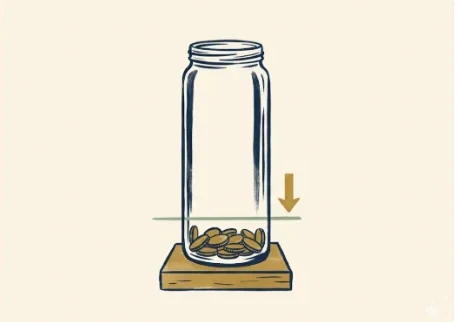
Almost every consumer-facing article about credit scoring in the United States carries the same recommendation: keep your credit card utilization below 30%. The number is stated as if it were a published threshold, often without attribution. It is repeated by banks in their own credit-education content, by personal finance writers across the major sites, and by social media advice accounts that paraphrase those sources without going further. The trouble is that the 30% number describes a defensive floor — a level above which damage starts to compound noticeably — and not the level that actually maximizes the FICO score. The level that does is closer to 10%, and the gap between the two is wide enough to matter for tier-boundary decisions like mortgage pricing, premium card approvals, and auto loan APR brackets.
If you came here to check whether the CFPB really recommends staying under 30%: yes, it does — and that is not the same thing as a scoring threshold. The bureau’s consumer education repeats the “no more than 30 percent” guideline in both its credit score myths post and its Understand your credit score materials. What it does not say — and what gets added in translation — is that something switches on at 31%.
The distinction is the whole point. The CFPB is describing prudent borrowing behaviour: a defensive marker for general money management. FICO and VantageScore are describing a continuous relationship, with no cliff, no step and no penalty that activates at a particular number. Under those models, 29% is not “safe” and 31% is not “damaged”; 9% simply scores better than 29%, which scores better than 60%. So both statements are true at once: the CFPB does recommend under 30%, and 30% is not the level that maximises your score. If you have an application coming up, the band worth targeting is 1–9%, and the balance that gets scored is the one on your statement date — not what you owe today, and not what you owe after you pay the bill.
This guide is a working reference for what FICO’s amounts-owed factor actually rewards, with the score-impact thresholds that the available data supports, and a worked example showing how the same aggregate balance can produce two different FICO scores depending on how the balance is configured across cards. It pairs with the FICO factors guide, which covers the full 35/30/15/10/10 weighting; here we go deep on the 30% factor alone, because the misinformation around it is the largest single optimization opportunity available to a US consumer with otherwise clean credit.
The short answer: there is no 30% cliff. FICO and VantageScore score utilization as a continuous variable — no penalty switches on at 31% — and lower is generally better, with the best band around 1–9% rather than 30%. The balance scored is the one reported on your statement closing date, which is why paying before the statement cuts can lower your reported utilization even if you pay in full.
Where the “30%” number comes from
The 30% rule is not, despite frequent characterization, a published FICO threshold. FICO has never said in any of its public documentation that 30% utilization is “safe” or that 31% is “unsafe”. What FICO has said, in its What’s in your credit score page, is that “the lower this percentage, the better the impact on your credit scores” — a continuous-decline relationship, not a binary cutoff.
The 30% number appears to have been popularized by lenders’ own credit-education materials in the early 2000s as a defensive shorthand. The intuition behind it was reasonable for the time: most consumers carry some revolving balance, the model penalizes high balances, and 30% is a tractable target that materially reduces the damage relative to running 60% or 80%. Telling consumers to “pay down to 30%” was useful advice for a population running utilization at much higher levels, and the number had the advantage of being memorable.
The same number also appears in federal consumer-education materials, which is why so many people attribute it to the Consumer Financial Protection Bureau. The CFPB’s own guidance does tell consumers that experts advise keeping their credit use “at no more than 30 percent” of their total credit limit, and the figure shows up in both its credit-score-myths post and its Understand your credit score materials. That is sound general money-management advice — a defensive marker of responsible borrowing — but it is not a statement about where the FICO curve actually bends. The CFPB is describing prudent behavior; FICO is describing a continuous score relationship. Reading the CFPB’s “30 percent” as a hard scoring cliff conflates the two, and it is the single most common source of the myth.
The advice persisted, however, long after the underlying score data became available to confirm that 30% is not the optimum. Consumer testing tools — the FICO simulator that Experian sells, the score simulators that several issuers offer their cardholders, the empirical analyses the personal finance community has done with cooperating consumers — converge on the same finding: 0% utilization scores slightly worse than a small positive utilization (because the model rewards seeing active credit use), 1–9% utilization scores best, 10–29% scores measurably worse than 1–9% but still in acceptable territory, 30–49% starts to drop the score noticeably, and so on through the curve.
The 30% rule is therefore correct as a “do not exceed” line but wrong as a “good enough” line. For consumers optimizing toward a tier boundary or applying for credit in the near term, the difference between 28% and 8% is several tiers of score, not a rounding error.
What the data says — score impact by utilization tier
The score-impact figures below are based on FICO’s published material, the score-simulator output from major issuers, and the empirical pattern observed across thousands of cooperating-consumer data points the personal finance community has shared over the last decade. The numbers are approximate ranges, not point values, because the model is non-additive and the impact at any single threshold depends on the rest of the consumer’s file.
| Aggregate utilization | Approximate FICO impact | Practical context |
|---|---|---|
| 0% | -3 to -10 points vs 1–9% | Model wants to see active credit use; a perfectly zero file scores slightly worse than a tiny positive balance. |
| 1–9% | Baseline — best tier | The optimization target for a consumer maximizing their score before a major application. |
| 10–29% | -10 to -25 points vs 1–9% | Common comfortable zone for consumers who pay statement balance in full but report mid-cycle. |
| 30–49% | -25 to -55 points vs 1–9% | The "30% rule" line is here. Damage starts compounding visibly above this. |
| 50–74% | -55 to -90 points vs 1–9% | Tier shifts become likely (e.g., 740 down to 670). Mortgage pricing changes. |
| 75–99% | -90 to -130 points vs 1–9% | The "maxed-out" zone the model treats as elevated risk. Premium card approvals usually fail here. |
| 100% (over-limit) | Smaller than 75–99% in some models | Counter-intuitive but documented: extreme over-utilization is sometimes scored slightly less harshly than 75–99%, because the model interprets it as a sign of active use. |
Two patterns are worth pulling out of the table. The first is that the largest single jump on the curve is between 30% and 50%, not above 50% — which is why the “30% rule” stuck in popular advice even though it is wrong about the bottom of the curve. The second is the small but real anti-zero bias at the bottom: a consumer who pays all cards to zero before the statement closes will score slightly worse than a consumer who lets one card report a 3% balance. This is the structural basis for the AZEO (“All Zero Except One”) tactic discussed below.
Per-card utilization is independently scored
The aggregate utilization figure is the dominant input, but FICO also looks at per-card utilization on each individual revolving account. A consumer with one card at 80% utilization and three cards at 0% has a different score than a consumer with all four cards at 20% utilization, even though their aggregate ratio is identical at roughly 20%.
The mechanics are that the model picks up the highest single-card utilization as a separate signal in addition to the aggregate. A consumer running one card hot — perhaps because they put a recent large purchase on the card that has the best rewards in the category — generates a negative signal on that card’s per-card factor even if the rest of the file is clean. One quiet fix for a single hot card is to reallocate part of a credit limit from another card at the same issuer onto it, which lowers that card’s per-card ratio without a new inquiry.
The asymmetry creates the AZEO playbook for pre-application optimization. Before a major credit pull (a mortgage application, an auto loan, a premium card), the consumer pays down each card individually to a zero statement balance, except for one card that they let report a small positive balance (1–9% of that card’s limit). The configuration shows the bureaus zero per-card utilization on every card except one, which reports a small positive — generating the minimum amount of utilization signal the model will reward. The aggregate utilization is the same as it would be if the same balance were spread across multiple cards, but the per-card signal is materially better.
The score gain from AZEO is generally in the 5–15 point range for a consumer with otherwise clean credit. That sounds small, but it can be the difference between a 740 mortgage rate and a 760 mortgage rate, which over a thirty-year mortgage at a six-figure principal is real money. See the AZEO glossary entry for the full timing mechanics.
When utilization is captured — the statement-date trap
Most consumers who pay their statement balance in full every month assume their utilization is zero. The bureaus, however, see the statement balance — not the current balance. If your card has a $10,000 limit and you run $4,000 through it each month, paying the statement balance in full by the due date, the bureaus see 40% utilization on that card every reporting cycle. Your credit history shows no late payments and no interest charges, but your FICO score reflects that 40%, and you wonder why your score is lower than your behavior suggests.
The mechanism is that card issuers report your account to the bureaus once per month, typically on or shortly after the statement closing date. The figure they report is your statement balance — the balance at the moment the statement closed. Whether you pay that balance in full a week later or carry it for a year, the figure the bureaus see for that month is the statement-date snapshot.
The fix is to manage the statement-date balance directly, separately from the pay-in-full behavior. Two common patterns:
- Pre-statement payoff. A few days before your statement closing date (visible in your card account online), pay the current balance down to a small fraction of the limit — perhaps 5% — then let the statement issue with that small balance. Pay the small statement balance off after the statement issues to avoid any interest. The bureaus see 5% utilization that cycle instead of 40%.
- Mid-cycle reset. Make a payment in the middle of the cycle to keep the running balance low, then continue using the card normally. The statement-date snapshot picks up whatever balance happens to be on the card at closing, so the goal is to time the statement date such that the balance is low.
Both patterns require knowing your statement closing date for each card, which is shown on every statement and in every online account portal. The closing date is usually three weeks before the payment due date — not the same as the due date.
A worked example — same balance, two configurations
Consider a representative consumer, Marcus, who is six weeks away from a mortgage application and wants to maximize his FICO before the lender pulls his credit. He has four credit cards:
- Card A: limit $20,000, current balance $1,000
- Card B: limit $10,000, current balance $1,500
- Card C: limit $8,000, current balance $1,200
- Card D: limit $5,000, current balance $300
Total balance: $4,000 across $43,000 of aggregate limit. Aggregate utilization: 9.3% — already in the best tier. But the per-card configuration is mid-range: A at 5%, B at 15%, C at 15%, D at 6%. The model picks up the 15% on B and C as elevated per-card signal.
Configuration 1 (do nothing): report as-is. Aggregate 9.3%, but per-card best at 5% on A, with B and C reporting 15%. FICO impact: baseline-good, but with about 5–10 points of foregone score relative to the optimum.
Configuration 2 (AZEO): Marcus pays down B, C, and D to zero balance before their respective statement closing dates. He leaves Card A reporting its existing $1,000 balance, which is 5% of the limit. Aggregate utilization at the closing dates: 2.3% (just the $1,000 on A divided by $43,000 aggregate). Per-card: A at 5%, B/C/D at 0%. Within one or two reporting cycles, his FICO updates to reflect the new configuration. Expected gain: 8–15 points relative to Configuration 1.
The dollar value of those eight to fifteen points depends on what Marcus is applying for. On a $400,000 30-year fixed mortgage, moving from the 740 tier to the 760 tier typically shaves roughly 0.125–0.25% off the offered rate. At 0.20% on a $400,000 mortgage over 30 years, that is approximately $17,000 of lifetime interest. The eight to fifteen points of AZEO score gain captured that.
The same configuration would generate no score change for a consumer who is not near a tier boundary. If Marcus’s starting score were 810 instead of 745, his mortgage rate would be the same with or without AZEO, because the lender’s rate tiers cap out at the high-700s for most products. AZEO is most valuable for consumers within a few points of a meaningful tier boundary; less valuable for consumers comfortably above or below.
Practical playbook
For the ordinary monthly hygiene case — no major application pending, just trying to keep the score healthy — the playbook is short:
- Know each card’s statement closing date and write them down.
- A few days before each closing date, look at the running balance on that card. If it is above 10% of the card’s limit, make a payment to bring it under 10%.
- After the statement issues with the small balance, pay the statement balance in full to avoid interest.
- Repeat each cycle. No special tactics, no AZEO, just statement-date management.
For the pre-application case — within 60 days of a meaningful credit pull — the playbook adds the AZEO step:
- Pick one card to let report a small positive balance (the one with the highest limit usually, so the percentage is smallest for the absolute dollar amount).
- For every other card, time a payment to zero out the balance before that card’s statement closing date.
- Let the next reporting cycle pass, so the bureaus pick up the new configuration.
- Apply for the credit product. After the application, return to the ordinary monthly hygiene routine.
The order of operations matters: you want the bureaus to see the optimized configuration before the credit pull, not after. Most issuers report monthly, so allow at least one full reporting cycle (roughly 30 days) between the AZEO move and the application.
Special cases where the standard playbook bends
The general utilization rules above hold for the majority of US consumers with personal credit cards. Several specific situations create predictable departures from the standard playbook and are worth flagging individually.
Business credit cards. Most business credit cards from major issuers — Chase Ink, Capital One Spark, Amex Business Platinum — report only to commercial credit bureaus (Dun and Bradstreet, Experian Business, Equifax Small Business) and not to the personal consumer bureaus. The notable exceptions are Capital One business cards, which historically report to personal bureaus, and a handful of smaller issuers. The practical consequence is that a heavy business-spend month does not show up in your personal utilization at all for most business cards, which means a small business owner who runs $30,000 a month through a Chase Ink can still report 5% personal utilization. Verify the reporting behavior for each specific business card before relying on it; this is one of the few areas where issuer-by-issuer behavior matters more than category-level generalization.
Recent credit limit increases. When an issuer increases your credit limit — either at your request or automatically — the new limit reports to the bureaus on the next reporting cycle, which can take up to 30 days. A consumer who requested a limit increase precisely to lower their utilization before an application should allow at least one full reporting cycle between the limit increase and the credit pull. Otherwise the bureaus may still be using the old, lower limit when the pull happens.
Authorized-user accounts. Being added as an authorized user on someone else’s card inherits the account’s age, payment history, and utilization onto your file in most FICO models. A primary cardholder with a $40,000 limit and $20,000 balance running 50% utilization passes that 50% per-card signal onto every authorized user on the card. Conversely, an authorized user on a low-utilization, long-history card benefits from the favorable signal. Adding a young adult as an authorized user on a clean, old card is a long-established credit-building tactic for that reason. The reverse — being removed from a high-utilization card — can swing your score by 20–40 points in either direction depending on the account’s prominence in your file.
Closing high-limit cards before applications. A consumer planning a major credit pull who happens to have a high-limit card sitting unused may be tempted to close it for clean-up. The aggregate-limit drop usually outweighs the score-hygiene gain. Wait until after the application to close any high-limit account, not before.
FICO 10 and trended data — the model upgrade that changes the math
FICO 10 and FICO 10T (the “T” stands for trended) were released in 2020 and have been adopted unevenly across the US lending industry. Most consumer credit cards and a growing share of personal loan products use FICO 8 or FICO 9, but newer mortgage products and several auto lenders use FICO 10 or 10T. The relevant difference for utilization purposes is trended data.
The earlier FICO models (8, 9) use only the current snapshot of your utilization — what is on your file at the moment the score is calculated. FICO 10T uses a 24-month look-back: the trajectory of your balances and payments over the prior two years, not just the latest data point. The practical effect is that a consumer who has carried high balances historically and only recently paid them down receives a less favorable score in FICO 10T than in FICO 8, because the trended data shows the recent paydown was preceded by a long period of high utilization. Conversely, a consumer with a long history of low utilization who happens to have a high statement balance this month receives a more favorable score in FICO 10T than in FICO 8, because the trended data shows the recent spike is anomalous.
Conforming mortgages are not scored with FICO 9 at all, and the transition to FICO 10T has not actually started. Per the FHFA, the mortgage market is in an interim phase in which approved lenders may choose between Classic FICO — the older 2/4/5 scores, not FICO 9 — or VantageScore 4.0, an option available since July 2025. FICO 10T remains an approved model planned for future use, with historical FICO 10T scores expected only in the summer of 2026, so it is not yet driving mortgage decisions. For consumers planning a mortgage application within the next 12–18 months, the implication is that recent paydowns matter more in the older models and consistent low utilization over months matters more in the newer models once they do arrive. The practical implication for the AZEO playbook is that it remains valuable but less spectacular under FICO 10T; the trended-data sensitivity means the model already knows whether you typically run low or not.
Common questions that come up
Several recurring questions are worth addressing because the answers shape the playbook in non-obvious ways.
Does utilization on a 0% APR promotional balance affect the score? Yes. The FICO model does not distinguish between interest-bearing and promotional 0% APR balances. A consumer who transferred $8,000 to a card with a $10,000 limit at 0% APR for 18 months is reporting 80% utilization on that card every month for the duration of the promo, even though they are paying no interest. The score impact is identical to carrying the same balance at a 25% APR. The remedy is either to pay the promo balance down faster than the promo timeline requires or to spread the balance across multiple cards. The balance transfer savings calculator models the trade-off.
Charge cards like Amex Pay-in-Full. Amex’s charge cards (Platinum, Gold, Green) have no preset spending limit and the issuer reports the account differently to the bureaus than a revolving credit card. The FICO model historically treated Amex charge cards as not contributing to utilization at all (no limit means no ratio). More recent FICO models include the highest balance ever reported as a proxy “limit” for utilization purposes, which means a one-time high charge can drag the utilization figure for subsequent cycles even after the charge is paid in full. The mechanic is asymmetric and has caught consumers off-guard; if you carry charge-card balances, monitor your score after large months.
Why does Credit Karma show different utilization advice than this guide? Credit Karma uses VantageScore 3.0, not FICO. VantageScore weights utilization slightly differently from FICO (utilization is the largest single factor at ~30% in VantageScore vs the second-largest at 30% in FICO), and the threshold curves are not identical. Most lenders, however, pull FICO — not VantageScore — for actual lending decisions. Credit Karma’s utilization advice is reasonable but is optimizing for a score most lenders do not use.
Authorized user with high utilization — how to undo. If you are an authorized user on a card with elevated utilization that is dragging your score, the cleanest fix is to ask the primary cardholder to remove you from the account. Removal causes the entire account to drop off your credit file within one reporting cycle, taking the negative signal with it. The trade-off is the loss of the account’s positive contributions (history length, payment history). For long-standing authorized-user accounts that are net-positive, the trade-off is rarely worth it; for recently added high-utilization accounts, removal can recover the lost score quickly.
Sources and how we cite
- FICO weight and continuous-decline relationship for amounts-owed: myFICO — What’s in your credit score. The 30% weight and the published statement that “the lower this percentage, the better” are both from FICO directly.
- Statement-date reporting mechanic: CFPB — When does my credit card balance get reported?. The CFPB confirms that issuers typically report once per month around the statement closing date, not after each payment.
- CFPB and the “30 percent” rule of thumb: CFPB — Credit score myths and CFPB — Understand your credit score. The CFPB repeats the “no more than 30 percent” guideline as responsible-use advice, not as a scoring threshold — the distinction this guide is built around.
- Per-card vs aggregate scoring: myFICO — How are credit scores calculated confirms both factors are independently considered.
- Anti-zero bias at 0% utilization: empirical pattern from consumer score-simulator output, consistent across FICO 8/9/10 and across issuer simulators. Not a FICO-published threshold, but a stable observation across the data.
The score-impact tier table on this page is approximate, not point-precise. The actual score change for any individual consumer depends on the rest of their file — payment history, length, mix, new credit — and on which FICO model the lender is using. The pattern (sub-10% best, 10–29% next, 30–49% degraded, 50%+ damaging) is consistent across models and across observed data; the magnitude varies. Where you see a specific score-impact range, treat it as a guide rather than a guarantee, and verify against your own score-simulator output if you have access to one.
Quick answers
Does the CFPB recommend keeping credit utilization below 30%?
The CFPB's consumer education does repeat the "use no more than 30% of your credit limit" rule of thumb — it appears in the bureau's "Understand your credit score" materials and its credit-score-myths guidance. But the CFPB frames it as a conservative marker of responsible borrowing, not a scoring threshold where a penalty switches on at 31%. The actual scorers, FICO and VantageScore, treat utilization as a continuous variable and reward the 1–9% band over 30%. So "below 30%" is a safe floor the CFPB endorses for general money management, while "below 10%" is the level that maximizes the FICO score before a major application.
Is there really a 30% credit utilization cliff?
No. FICO and VantageScore treat utilization as a continuous variable — there is no magic threshold where the penalty switches on at 31%. Lower is generally better, and the best-scoring range is roughly 1–9% aggregate, not 30%.
Which balance does my credit score actually use?
The balance reported on your statement closing date, not your current balance or the balance after you pay. Issuers report the statement-date snapshot once per month, which is why paying before the statement closes can lower your reported utilization even if you already pay in full.
Educational content only. finbarrow is an independent editorial publication, not a licensed financial advisor, broker, tax preparer, or attorney. Verify rates and terms with the issuer or relevant regulator. See disclaimers and funding disclosures.