PSLF buyback: recover the months forbearance froze (2026)
PSLF buyback lets you pay for past forbearance months so they count toward forgiveness. The eligibility rules, the March 2026 cost change, and the math.
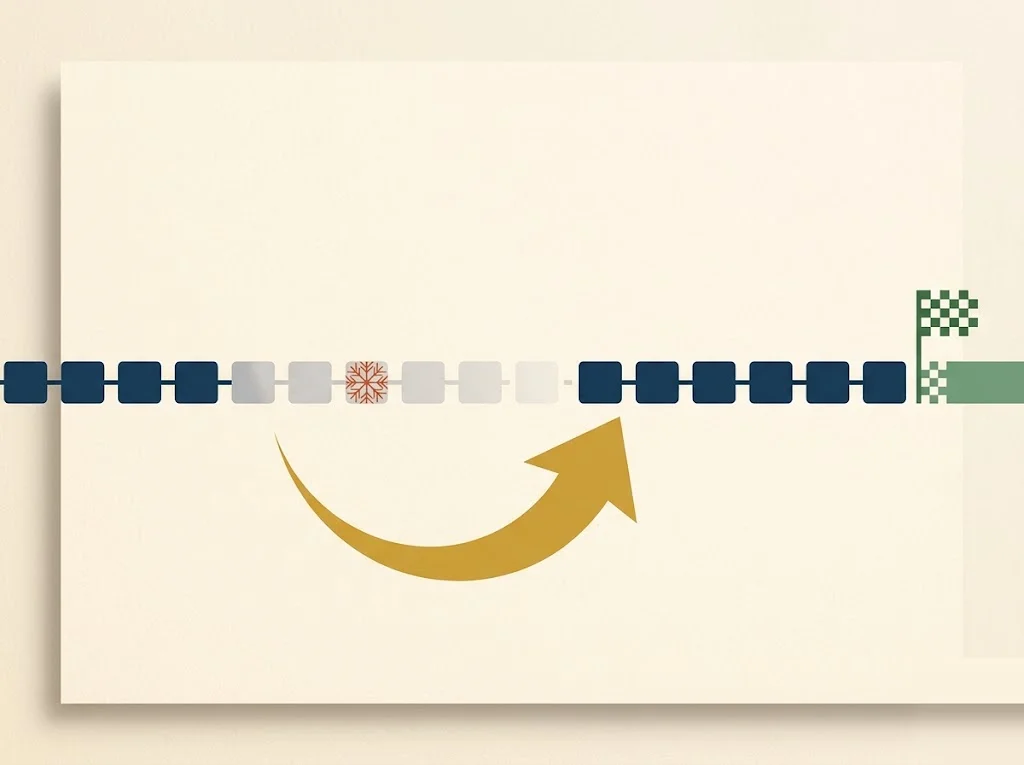
For ten years the promise of Public Service Loan Forgiveness has been mechanical: make 120 qualifying monthly payments while working full-time for the government or an eligible nonprofit, and the federal Direct Loan balance that remains is wiped out — tax-free at the federal level, unlike the income-driven-repayment forgiveness that can land you a tax bill. Then, in the summer of 2024, the machine jammed. Litigation over the SAVE repayment plan dropped roughly 8 million borrowers into an administrative forbearance where payments stopped and, crucially, the PSLF count stopped with them. Months that should have ticked toward 120 simply did not register.
PSLF buyback is the repair the Department of Education built for exactly that failure. It lets a borrower purchase credit for past months spent in certain deferment or forbearance that earned no qualifying payment — by paying, after the fact, what they would have owed under an income-driven repayment plan during those months. It is one of the few genuinely good options in a chaotic year for student loans. But it is narrow, it is newly more expensive, and almost everything about it is provisional as of June 2026, tethered to ongoing litigation and the wind-down of SAVE. Treat every number here as illustrative and confirm the live rules at studentaid.gov before you act.
As of June 2026, PSLF buyback lets you earn forgiveness credit for past deferment or forbearance months — most notably the SAVE litigation forbearance that began around July 2024 — by paying what income-driven repayment would have cost then. Two conditions are mandatory: you must already have at least 120 months of qualifying employment, and the bought-back months must be what bring you to 120 qualifying payments. On March 31, 2026, the Department stopped using the cheaper SAVE-plan formula for those months and switched to the IBR, PAYE, or ICR formula, making buyback notably costlier. You apply via the reconsideration form on studentaid.gov; MOHELA processes it.
What buyback actually buys
Start with what PSLF counts and what it does not. A qualifying payment is one made while you held qualifying employment under a qualifying repayment plan. The trouble is that several common situations break that chain. A period of deferment or forbearance freezes the count even when you kept working your eligible job the entire time — the employment was fine, but no payment credit accrued. That gap is precisely what buyback fills.
The eligible periods are specific. They include deferment or forbearance during which you had qualifying employment but earned no payment credit, and they explicitly include the SAVE litigation administrative forbearance that began in approximately July 2024. Shorter forbearances — those under 12 consecutive months — can be bought back too, as can months you spent on a non-income-driven plan while working a qualifying job. The common thread is a stretch of real public-service work that the count ignored. (If the income-driven plans themselves are unfamiliar territory, our deep dive on IDR plans walks through how each one sets a payment, and the glossary entry on income-driven repayment gives the short version.)
The two conditions that gate everything
Buyback is not a way to accelerate forgiveness. It is a way to recover months you already earned through work but were denied through circumstance, and the program’s own definition makes that boundary strict through two hard conditions that must both hold.
First, you must already have at least 120 months of qualifying employment. The work has to be there — full-time, which PSLF measures as an average of 30 hours a week, for a government or eligible nonprofit employer — even across the months that produced no payment credit. (If you consolidated your loans along the way, the count you are measuring against 120 becomes a balance-weighted average of your prior payments, which can shift where you actually stand.) Second, buying back those months must result in forgiveness. In plain terms, the bought-back months have to be the ones that carry you across the 120-qualifying-payment line under PSLF or Temporary Expanded PSLF, known as TEPSLF. You cannot use buyback to top up a tally when you are still years of qualifying employment short; it is a final-step instrument, applied at or near the 120-month mark, not a shortcut taken in year four.
That design is why the typical buyback candidate is someone standing at the doorway: a decade of eligible employment behind them, a handful of forbearance months the only thing between them and a zero balance.
A worked example: 14 frozen months
Consider a nurse — call her Renata — who has spent 120 months working full-time at a nonprofit hospital, every month qualifying employment. The catch is that 14 of those months fell inside the SAVE administrative forbearance, when her payments were paused and earned no PSLF credit. On paper she has 106 qualifying payments, not 120. She is four months of work past the finish line yet stranded 14 payments short of it.
Buyback is built for her. She can purchase credit for the 14 frozen months, which lifts her count to 120 and triggers forgiveness of her remaining Direct Loan balance. What changed on March 31, 2026, is the price of doing so. Before that date, the buyback amount for SAVE-forbearance months drew on the lowest income-driven repayment figure she would have qualified for — frequently the cheaper SAVE-plan formula. After that date, the Department stopped using the SAVE formula for these months and switched to the IBR, PAYE, or ICR formula, which produces a meaningfully higher monthly figure. The mechanics of who qualifies did not change; the cost did.
| Renata’s buyback | Figure |
|---|---|
| Qualifying employment months | 120 |
| Counted qualifying payments | 106 |
| Months to buy back (SAVE forbearance) | 14 |
| Per-month cost, OLD basis (pre-3/31/2026 SAVE formula) | low IDR amount (illustrative) |
| Per-month cost, NEW basis (IBR / PAYE / ICR formula) | meaningfully higher (illustrative) |
Every dollar implied above is illustrative — the point is the structure, not the sum. Her actual per-month amount depends on her income history and the formula now applied, which is why studentaid.gov and her servicer are the only sources that can quote her real number. The lesson the table carries is that 14 months bought under the new basis cost more than the same 14 months would have under the old, and that the gap is the direct consequence of the March 2026 change.
The caveats that actually bite
The first caveat is timing, and it cuts in an unfamiliar direction. The bought-back months do not count when you apply — they count once the buyback payment is actually made and processed. Processing is slow and backlogged, so the credit that closes out your 120 can sit in a queue for a long stretch after you have paid for it. Buyback rewards patience, not urgency.
The second caveat is that the ground is moving. This entire area is in flux because the SAVE plan is being retired under a proposed settlement. Beginning July 1, 2026, servicers are expected to start contacting borrowers and offering a 90-day window to switch repayment plans. Which plan you sit on affects your payment, your forgiveness path, and in some cases your buyback math, so a decision that looks right in June may need revisiting weeks later. None of the figures or rules in this guide are guaranteed to survive the year unchanged.
The third caveat is the most expensive to get wrong: do not confuse PSLF forgiveness with the income-driven kind. PSLF forgiveness is tax-free at the federal level, while forgiveness at the end of an income-driven plan can be taxed as income — a distinction our piece on the student-loan forgiveness tax bomb takes apart in detail. Buyback is a PSLF mechanic, so the relief it unlocks is the tax-free variety, but borrowers weighing it against simply riding out an income-driven plan should price that difference honestly.
Who should pursue it
PSLF buyback is for the borrower whose finish line is real and whose only obstacle is a frozen count. If you have at least 120 months of genuine qualifying employment and a block of deferment or forbearance — the SAVE pause above all — standing between you and 120 qualifying payments, buyback is very likely the cleanest route to a tax-free discharge, even at the higher post-March-2026 cost. To start, submit the PSLF reconsideration form on studentaid.gov, select “PSLF Buyback” as the reason, and let MOHELA, the PSLF servicer, process it; you generally apply at or near 120 months of qualifying employment.
It is not for the borrower still years of employment short, for whom the count will simply continue and no purchase is warranted, nor for anyone whose loans are not the federal Direct variety that PSLF forgives — a distinction that also drives the federal-versus-private refinance decision, since refinancing federal loans privately forfeits PSLF entirely. And while interest paid along the way may have offered a modest student-loan interest deduction, that is a separate question from forgiveness. Whatever your situation, this is a year to verify before you move: confirm your eligibility, your month count, and your exact buyback amount with studentaid.gov and your servicer first.
Sources
- Federal Student Aid — Public Service Loan Forgiveness — the US Department of Education’s authority on PSLF eligibility, the 120-qualifying-payment requirement, tax-free federal forgiveness, and the PSLF reconsideration / buyback process; this is the page to verify current rules against.
- US Department of Education — press materials on the 2026 student-loan repayment changes and the SAVE plan wind-down, including the March 31, 2026 shift to the IBR/PAYE/ICR formula for SAVE-forbearance buyback months and the July 1, 2026 servicer outreach and 90-day plan-switch window.
- NASFAA — secondary explainer on SAVE-forbearance buyback eligibility and the mechanics of recovering frozen PSLF months.
PSLF rules are changing rapidly in 2026 because of ongoing litigation and the SAVE wind-down. Every figure here is illustrative and current as of June 2026 only; eligibility, the buyback calculation, and the application process can all change with little notice. Confirm the current rules and your own buyback amount with studentaid.gov and your loan servicer before acting.
Quick answers
What is PSLF buyback and how does it work?
As of June 2026, PSLF buyback lets you earn Public Service Loan Forgiveness credit for certain past months of deferment or forbearance that did not count as qualifying payments — by paying, after the fact, roughly what you would have owed under an income-driven repayment plan for those months. It exists mainly for borrowers who had qualifying public-service employment during a pause but earned no payment credit, such as the SAVE litigation forbearance. You apply through the PSLF reconsideration form on studentaid.gov and select "PSLF Buyback." Because these rules are shifting in 2026, confirm the current process at studentaid.gov before acting.
Who is eligible for PSLF buyback?
Two hard conditions must both be met as of June 2026. First, you must already have at least 120 months of qualifying employment — full-time work for a government or eligible nonprofit employer — even if some of those months earned no payment credit. Second, buying back the months must actually result in forgiveness, meaning the bought-back months are what carry you to 120 qualifying payments under PSLF or Temporary Expanded PSLF. Buyback is a final-step tool, not a way to pad a count when you are still years of employment short. Verify your own standing at studentaid.gov.
Why did PSLF buyback get more expensive in 2026?
On March 31, 2026, the US Department of Education changed how it calculates the buyback amount for SAVE-forbearance months. Previously the figure used the lowest income-driven repayment amount you would have qualified for, which often meant the cheaper SAVE-plan formula. The Department will no longer use the SAVE formula for those months and will instead apply the IBR, PAYE, or ICR formula, which produces meaningfully higher payments. As a result, buying back SAVE-forbearance months now costs more than it would have under the old method. Figures change, so confirm your amount with your servicer.
Can I buy back the SAVE forbearance months for PSLF?
Yes, as of June 2026 the SAVE litigation administrative forbearance that began around July 2024 is explicitly among the periods eligible for PSLF buyback, provided you had qualifying employment during it and meet both eligibility conditions. Roughly 8 million borrowers had payments paused during that forbearance and earned no PSLF or income-driven repayment credit. You still need at least 120 months of qualifying employment, and the bought-back months must be what bring you to 120 qualifying payments. This area is in flux because the SAVE plan is being retired, so verify the current rules at studentaid.gov.
Educational content only. finbarrow is an independent editorial publication, not a licensed financial advisor, broker, tax preparer, or attorney. Verify rates and terms with the issuer or relevant regulator. See disclaimers and funding disclosures.