Can Parent PLUS Borrowers Use RAP? Why They Are Shut Out
Parent PLUS loans cannot use RAP, the new Repayment Assistance Plan. Here is why, the closed consolidation window, and what options remain.
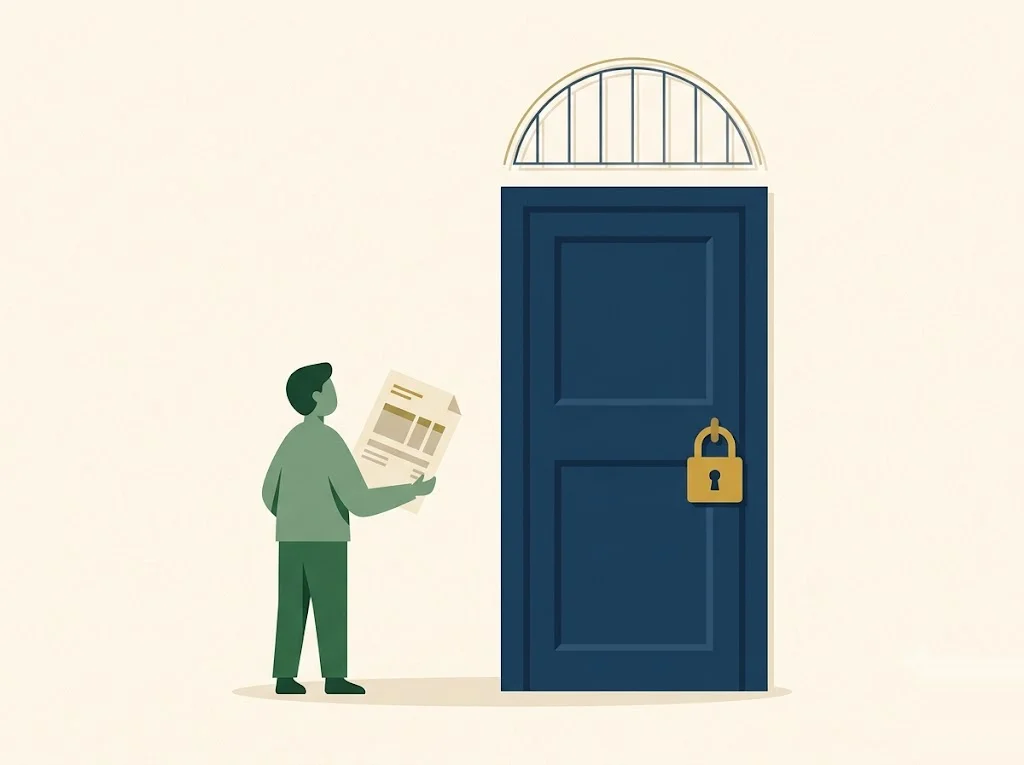
The federal student loan system has spent the past year being rebuilt around a single new plan, and on July 1, 2026 that plan finally comes alive. The Repayment Assistance Plan, known by the unavoidable acronym RAP, was written into law by the budget reconciliation package that President Trump signed on July 4, 2025, and for most borrowers it represents the future of income-driven repayment. Yet one large group of families discovered that the door was never really open to them. Parents who borrowed to put their children through college, using the federal program called Parent PLUS, are not invited in. For them the question is not which income-driven plan to choose but whether they have any income-driven option at all.
The short answer: Parent PLUS borrowers cannot use the Repayment Assistance Plan. The statute that created RAP explicitly excludes Parent PLUS loans, and it also excludes any Direct Consolidation Loan that wrapped a Parent PLUS loan inside it. There was a narrow, now-closed path to a different income-driven plan through consolidation before July 1, 2026, but RAP itself was never available to these loans and never will be. The exclusion is structural and permanent, baked into the design of the program rather than left to a servicer’s discretion.
What RAP is, and the wall built around Parent PLUS
The Repayment Assistance Plan is the income-driven repayment plan created by Public Law 119-21, the reconciliation law commonly called the One Big Beautiful Bill Act. It went live on July 1, 2026, and over time it is meant to become the principal income-driven option for federal student loan borrowers, calculating monthly payments as a share of income the way the older income-driven repayment (IDR) plans did. If you are still mapping how RAP compares with what came before, our Repayment Assistance Plan (RAP) pillar walks through the mechanics in full.
The wall around Parent PLUS loans is not an accident of paperwork. The law names them. A Parent PLUS loan is ineligible for RAP, and so is any Direct Consolidation Loan that includes a Parent PLUS loan. In the statute’s language these are “excepted Consolidation Loans,” a category that also captures the so-called double-consolidation loans that some families assembled in earlier years. Once a Parent PLUS loan is part of a consolidation, the consolidated loan carries the same exclusion. There is no servicer override and no application that reopens the door, because the limitation lives in the text of the law rather than in agency policy.
The consolidation window that just closed
For a time there was a workaround, and understanding it explains why late June 2026 is such a hard deadline. Historically, families used what came to be called the “double consolidation loophole.” By consolidating Parent PLUS loans twice, splitting them into separate groups handled by different servicers, a borrower could maneuver into income-driven plans that were otherwise off-limits to parent debt, reaching beyond the single plan, Income-Contingent Repayment, that Parent PLUS borrowers had traditionally been allowed to use. That maneuver ended on July 1, 2025. After that change, a single Direct Consolidation Loan now reaches Income-Based Repayment, the plan known as IBR, where historically the only doorway had been Income-Contingent Repayment.
The reconciliation law then set a firmer boundary. Under its terms, a Parent PLUS loan that is consolidated into a Direct Consolidation Loan before July 1, 2026 can still enroll in income-driven repayment, specifically Income-Based Repayment. A Parent PLUS loan that is not consolidated by that date permanently loses access to every income-driven plan. That includes both the older Income-Based Repayment and the new RAP. What remains for an unconsolidated Parent PLUS loan after the deadline is the trio of fixed schedules: the Standard, Graduated, and Extended repayment plans, none of which adjust to a borrower’s income.
Because consolidation is not instantaneous, the real deadline arrived earlier than the calendar date suggests. The Department of Education recommended applying to consolidate no later than April 1, 2026, reasoning that a consolidation application takes roughly 30 to 90 days to process and disburse, and that the new loan had to actually disburse, not merely be requested, before July 1, 2026. As of late June 2026, that processing window has effectively closed. A family that had not yet applied by the spring no longer had enough runway to clear the paperwork in time.
Why this matters for forgiveness and public service
The exclusion reaches past the monthly payment and into the longer arithmetic of forgiveness. Public Service Loan Forgiveness, the program that cancels remaining federal student debt after a decade of qualifying payments for people working in government and nonprofit jobs, counts only payments made under a qualifying income-driven plan. After the recent changes, “qualifying” means RAP or Income-Based Repayment. The catch for parent borrowers follows directly from everything above. A Parent PLUS borrower who never reached an income-driven plan, because the loan was not consolidated in time, cannot make payments that count toward Public Service Loan Forgiveness on those loans. The fixed Standard, Graduated, and Extended plans do not qualify.
That is the quiet cost of missing the consolidation window. It is not only that the monthly bill no longer flexes with income. It is that the clock toward forgiveness never starts, because there is no qualifying plan to make payments under. For a parent in public service who assumed forgiveness was a backstop, the loss is substantial and, for the loan as it stands, irreversible.
What is actually left, and where to look next
If you are a parent borrower reading this after the window has closed, it is worth being precise about your situation rather than discouraged into inaction. Your Parent PLUS loans, if unconsolidated, sit on the Standard, Graduated, or Extended plan. Those plans set a predictable bill, and for borrowers with comfortable incomes relative to the balance, a fixed schedule can be perfectly workable, even preferable, because it pays the debt down on a defined timeline without the paperwork of annual income recertification.
For borrowers whose payments feel unmanageable, the honest reality is that the federal income-driven menu is no longer reachable for these specific loans. The remaining questions become questions of cash flow and of whether private alternatives ever make sense, which is its own careful decision because refinancing federal debt into a private loan surrenders federal protections permanently. Our guide to federal versus private student loan refinancing lays out exactly what a borrower gives up in that trade, and it is essential reading before treating a private lender as an escape hatch.
The broader lesson is about timing in a system that was rewritten in a single year. RAP arrived on July 1, 2026 as the centerpiece of the new structure, but its very design left Parent PLUS loans outside, and the one bridge that led parents into income-driven repayment, consolidation before that same date, required action months in advance. The window is closed now. What is left is an evergreen fact: a Parent PLUS loan, on its own terms, cannot use the Repayment Assistance Plan, and no future application changes that.
Sources
- Congressional Research Service, “The Repayment Assistance Plan (RAP) in P.L. 119-21” — https://www.congress.gov/crs-product/IF13075
- U.S. Department of Education, Federal Student Aid — https://studentaid.gov/
- National Consumer Law Center, Student Loan Borrower Assistance — https://studentloanborrowerassistance.org/
Quick answers
Can a Parent PLUS loan ever enroll in RAP?
No. Parent PLUS loans, and any Direct Consolidation Loan that includes a Parent PLUS loan, are excluded from the Repayment Assistance Plan under the law that created it. The exclusion is permanent for the loan itself, not a temporary restriction.
Could consolidating my Parent PLUS loan have unlocked an income-driven plan?
Yes, but only Income-Based Repayment, and only if the Direct Consolidation Loan disbursed before July 1, 2026. The Department of Education recommended applying no later than April 1, 2026 because processing takes roughly 30 to 90 days. As of late June 2026 that window has effectively closed.
What repayment plans are left if I missed the consolidation deadline?
A Parent PLUS loan that was not consolidated in time permanently loses access to every income-driven plan, including the older Income-Based Repayment and the new RAP. That leaves only the Standard, Graduated, and Extended repayment plans.
Does this affect Public Service Loan Forgiveness for parent borrowers?
Yes. Public Service Loan Forgiveness counts payments made under a qualifying income-driven plan, which now means RAP or Income-Based Repayment. A parent borrower who never reached an income-driven plan cannot make PSLF-qualifying payments on those Parent PLUS loans.
Educational content only. finbarrow is an independent editorial publication, not a licensed financial advisor, broker, tax preparer, or attorney. Verify rates and terms with the issuer or relevant regulator. See disclaimers and funding disclosures.