Which credit bureau does each bank pull? Issuer guide (2026)
Which bureau each major issuer pulls — Chase, Amex, Capital One, Citi, Discover, Barclays — plus how to use a targeted freeze. Varies by state.
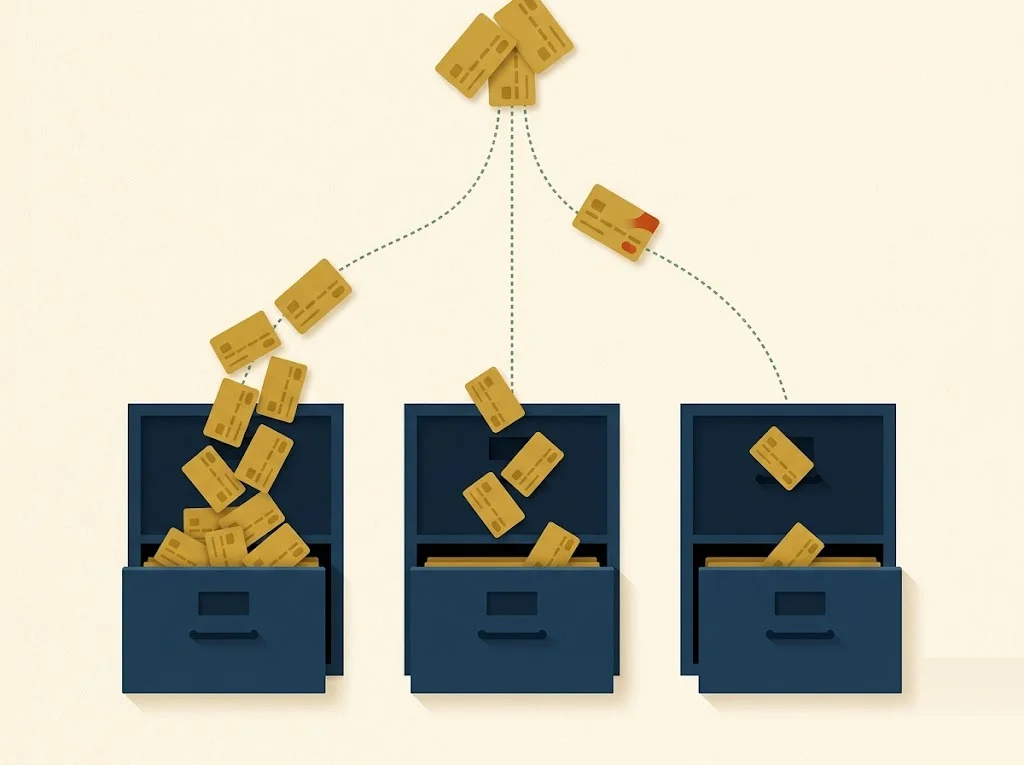
“Which credit bureau does my bank pull?” is one of the most-searched questions in US credit, and it has no clean answer — because no issuer publishes one. Banks do not disclose which of the three nationwide credit bureaus (Experian, Equifax, TransUnion) they query when you apply for a card, and none is locked into a single bureau by contract. What exists instead is a body of crowd-sourced evidence: applicants report which bureau registered the hard inquiry after they applied, and communities like Doctor of Credit and CreditBoards aggregate those data points into the issuer-by-bureau tables you find online. This guide is one of those tables, with the honesty that the data deserves — these are tendencies strong enough to plan around, not promises.
The short answer. For most applicants in 2026, American Express and Discover lean heavily on Experian, Barclays is the classic TransUnion shop, Capital One famously pulls more than one bureau (often all three), and Chase varies more by state than any other major issuer. But every one of those statements carries a “usually,” because the bureau an issuer pulls depends on your state, sometimes on the specific card product, and on data-provider arrangements that change over time. The data below is community-sourced and marked accordingly; treat it as a starting hypothesis, not a rule.
The issuer-by-bureau pattern (community-sourced, 2026)
The table reflects the bureau each issuer is most commonly reported to pull, based on aggregated applicant data points. It is anecdotal, not issuer-published, and the “varies by state” column is the most important one — for several issuers the dominant bureau flips depending on where you live.
| Issuer | Most-reported bureau | Notes |
|---|---|---|
| American Express | Experian | Among the most consistent — Experian in the large majority of states; isolated reports of all-three (e.g. Florida) or TransUnion. |
| Chase | Experian (varies most) | The most state-dependent major issuer. Experian dominates, but Equifax and TransUnion appear frequently by state. |
| Capital One | All three (often) | Notorious for pulling two or three bureaus on a single application; Equifax appears most often, then TransUnion and Experian. |
| Citi | Experian / Equifax | Frequently Experian for cards; varies by state and product, with Equifax common in some regions. |
| Discover | Experian | Experian in nearly all states; Equifax reported as the main outlier in a small number of states. |
| Barclays (US) | TransUnion | The classic TransUnion-first issuer; among the most predictable single-bureau patterns. |
| Bank of America | Experian / TransUnion | Varies by state; both Experian and TransUnion are commonly reported. |
| Wells Fargo | Experian (varies) | Mixed reports across all three depending on state and product. |
| U.S. Bank | TransUnion / Equifax | Often TransUnion, with Equifax common in some states. |
| Synchrony (store cards) | Equifax / Experian | Varies widely by retail partner and state; Equifax frequently reported. |
Last verified: June 2026. Because the underlying data is crowd-sourced and shifts over time, the only authoritative answer for your own application is the hard inquiry that lands on your report — see the self-test below.
Why the bureau varies — three reasons it is not fixed
The single most common mistake readers make with tables like the one above is treating them as deterministic. Three structural factors keep the answer fluid.
State. Issuers route applications through data arrangements that differ by region, so the bureau pulled for the same card can differ between, say, Florida and Ohio. Chase is the textbook example — its dominant bureau changes enough by state that a national “Chase = Experian” statement is only loosely true. American Express, by contrast, is consistent enough that the state effect rarely matters.
Card product. Some issuers use different bureaus for different products. A premium travel card application and a basic cash-back card application from the same bank can, in some reports, land on different bureaus. Mortgage and auto-loan pulls follow entirely different conventions from card pulls (mortgages typically pull all three through a tri-merge), so a card-application table does not predict a lending pull.
Time. Issuers renegotiate data-provider relationships, and the crowd-sourced consensus drifts year to year. A pattern that held in 2022 may not hold in 2026. This is why every responsible version of this table carries a “last verified” date, and why a five-year-old forum post is a weak basis for a real decision.
How to actually use this — the targeted-freeze strategy
Knowing the likely bureau is only useful if you do something with it. The main lever a consumer has is the security freeze, a free federal right under the Fair Credit Reporting Act. Freezing a bureau blocks new creditors from pulling that file; unfreezing (thawing) takes effect within minutes online. Two practical plays follow.
Steer the pull toward your strongest file. If one of your three reports is cleaner than the others — fewer hard inquiries, no stray collection, a higher score variant — you can try to make sure that is the file the issuer sees. Freeze the other two bureaus and leave your strongest one open. Some issuers, finding their preferred bureau frozen, will fall back to an open one; others will simply decline the application. This is why it pays to know the issuer’s primary bureau: if Amex’s Experian is your weakest file, you know in advance that an Amex application is the wrong move until you clean Experian up.
Minimize the inquiry footprint. Hard inquiries are bureau-specific. If you are planning several applications, spacing them so they do not all hit the same bureau keeps any single report from accumulating a cluster of inquiries — useful alongside issuer velocity rules and the Chase 5/24 rule, which count accounts, not inquiries, but interact with the same application planning. The distinction between a soft and a hard pull matters here: only hard pulls tied to applications cost you points and cluster on a bureau.
The freeze is also your front-line fraud control, which is why it pairs naturally with a layered credit freeze and fraud alert setup. The same mechanism that protects you from identity theft is the one that lets you, imperfectly, influence which file a lender reads.
How to find your data point — the self-test
You do not have to rely on a national average. Two methods reveal your own issuer-to-bureau pattern.
- Read the inquiry after the fact. After you apply for a card, pull your three reports at annualcreditreport.com (free, weekly) and see which bureau logged the new hard inquiry. That single data point is more reliable for you than any table, because it reflects your state and the exact product you applied for.
- Run the freeze test. Freeze two of the three bureaus and apply. If approved, check which open bureau took the inquiry. If declined with a frozen-file reason, you have learned the issuer insists on a frozen bureau — thaw it and reapply. This is slower and risks a decline, so use it only when the stakes justify it.
Contribute your result back to Doctor of Credit or CreditBoards if you want to improve the shared data — the table at the top of this page exists only because thousands of applicants did exactly that.
What to verify before acting
- The current pattern, not an old one. Confirm the issuer’s reported bureau on a recent thread (Doctor of Credit keeps its issuer page updated), since the consensus drifts.
- Your own three reports first. Freeze and application decisions should start from knowing what each of your files actually contains — pull all three before planning.
- The freeze mechanics for each bureau. Each bureau has its own freeze/thaw portal and login; set all three up before you need them.
- That a card pull does not predict a loan pull. Mortgage and auto applications follow different conventions (often tri-merge), so do not use this card table for a home-loan plan.
The honest bottom line: this is the one corner of US credit where the “data” is a community average rather than a published fact. Use it as a hypothesis, confirm it against your own inquiries, and lean on the security freeze — the one tool that is both free and genuinely yours — to do something with the answer.
Sources
- Issuer-to-bureau patterns: crowd-sourced applicant data, marked anecdotal. Doctor of Credit — Which Credit Bureau Does Each Card Issuer Pull? and the CreditBoards community. No issuer publishes this; treat as tendency, not guarantee.
- Security freeze as a federal right (free, nationwide): CFPB — What is a credit freeze / security freeze? and the Fair Credit Reporting Act, 15 U.S.C. 1681.
- Free weekly credit reports: annualcreditreport.com, the only federally authorized source.
Quick answers
Is there an official list of which bureau each bank pulls?
No. No card issuer publishes which credit bureau it pulls, and none is contractually committed to a bureau. Every table you see online — including this one — is built from crowd-sourced data points where applicants report which bureau got the hard inquiry after they applied, aggregated mostly by Doctor of Credit and the CreditBoards community. The patterns are strong enough to plan around, but they are tendencies, not guarantees, and they shift by state, by card product, and over time as issuers rotate data providers.
Which bureau does Chase pull?
Chase most often pulls Experian, but it is the issuer that varies the most by geography — community data shows Experian in the large majority of states, with Equifax and TransUnion appearing frequently depending on the state. Because Chase is so state-dependent, the only reliable way to know your own pattern is to check which bureau logged the hard inquiry after a recent Chase application, or to use the targeted-freeze test described below.
Which bureau does American Express pull?
American Express pulls Experian in the large majority of states, more consistently than almost any other major issuer. The commonly reported exceptions are a small number of states — Florida has been reported as pulling all three, and a few states have shown TransUnion — but for most applicants an Amex application means an Experian pull. This consistency is why a targeted Experian strategy is more dependable for Amex than for Chase.
Can I choose which bureau a bank pulls?
Not directly — you cannot tell an issuer which bureau to use. But you can influence the outcome with security freezes. If an issuer is known to pull one bureau and fall back to another when the first is frozen, freezing all bureaus except the one with your strongest file can sometimes steer the pull, though some issuers simply decline the application if their preferred bureau is frozen. Freezing is a free federal right under the FCRA, and it is the only real lever a consumer has over which file an issuer sees.
Educational content only. finbarrow is an independent editorial publication, not a licensed financial advisor, broker, tax preparer, or attorney. Verify rates and terms with the issuer or relevant regulator. See disclaimers and funding disclosures.