Disputing with the furnisher vs the bureau — which actually works
Direct dispute with the lender or dispute through the credit bureau? Only the bureau route preserves your right to sue under the FCRA. Here is why, and how.
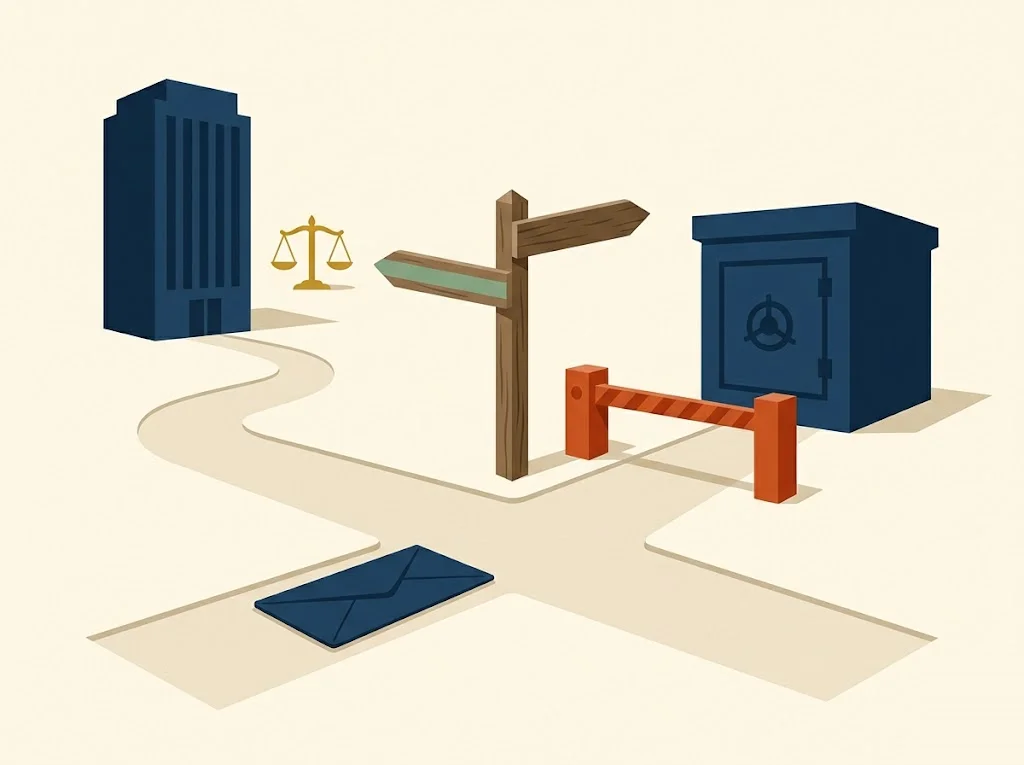
The short answer. When something on your credit report is wrong, you can dispute it two ways, and the two are not interchangeable: only one of them keeps the courthouse door open. Disputing through a credit bureau preserves your right to sue the lender or collector later, while disputing directly with that company — and only directly — does not. That single procedural fact, which most “how to dispute” guides never mention, should decide where you send your letter.
The two routes, and why they are not the same
The Fair Credit Reporting Act (FCRA) gives you two channels for challenging an error. The first is a direct dispute, where you contact the furnisher — the lender, bank, or collection agency that actually reported the item — and tell them their data is wrong. This route lives in 15 U.S.C. 1681s-2(a)(8) and is fleshed out by the Consumer Financial Protection Bureau’s Regulation V at 12 C.F.R. 1022.43. The second is a bureau dispute, where you contact Equifax, Experian, or TransUnion. Under 15 U.S.C. 1681i(a)(2), the bureau then forwards your dispute to the furnisher, which triggers that furnisher’s investigation duties under 15 U.S.C. 1681s-2(b).
Both routes oblige the furnisher to investigate. So far they sound equivalent. The difference is what happens when the furnisher gets it wrong anyway.
The decisive fact: only the bureau route lets you sue
Here is the part the marketing copy leaves out. The furnisher’s direct-dispute duties sit in subsection (a) of the statute, and subsection (a) carries no private right of action — the FCRA expressly reserves enforcement of those duties to regulators, not to consumers, in 15 U.S.C. 1681s-2(c) and (d). The furnisher duty you can personally enforce in court is the one in subsection (b), and that duty is triggered only when a credit bureau forwards the dispute to the furnisher. Skip the bureau, and you never light the fuse on the claim you could actually litigate.
This is not a theoretical reading. The Second Circuit confirmed it in Sprague v. Salisbury Bank & Trust Co., No. 19-3241 (2d Cir. 2020). The consumer there had notified the furnisher directly but did not allege that his dispute had passed through a consumer reporting agency. The court held that he failed to state a claim under 1681s-2(b): direct notice “standing alone” was not enough to create a private cause of action. The dispute had to travel through a bureau first.
If you want the statute-by-statute breakdown of why the furnisher number you cite changes the duty you invoke, the companion explainer on the 623 dispute versus the 611 dispute decodes those code numbers, and the deep-dive on 15 U.S.C. 1681s-2 furnisher duties walks the subsection (a) versus subsection (b) split in full. This page is about the practical choice in front of you.
Direct vs bureau, at a glance
| Direct dispute (to the furnisher) | Bureau dispute (Equifax/Experian/TransUnion) | |
|---|---|---|
| Statute | 15 U.S.C. 1681s-2(a)(8); 12 C.F.R. 1022.43 | 15 U.S.C. 1681i; triggers 1681s-2(b) |
| Furnisher must investigate? | Yes | Yes |
| Can you sue if they botch it? | No private right of action | Yes — 1681s-2(b) is privately enforceable |
| Investigation window | The FCRA 30-day period | 30 days (45 with added information) |
| Best used as | A supplement | Your primary move |
The takeaway from the table is blunt: file the bureau dispute first, every time. A direct dispute can still be worth sending — sometimes the furnisher fixes the error faster when contacted at the source — but treat it as a supplement, never as your standalone strategy.
How to file a direct dispute correctly
If you do send one, Regulation V sets out exactly what it must contain, and getting these mechanics wrong gives the furnisher a clean reason to ignore you. Under 12 C.F.R. 1022.43, a valid direct dispute needs three things: enough information to identify the account in question, a clear statement of the specific information you are disputing along with the basis for the dispute, and supporting documentation. Just as important, it must be sent to the furnisher’s designated dispute address — the one shown on your credit report or otherwise provided by the furnisher — rather than a random customer-service mailbox. A dispute mailed to the wrong address may not count at all. Once it arrives properly, the furnisher must conduct a reasonable investigation and report the results to you within the same period a bureau would have under the FCRA, the 30-day window.
There are limits on what the furnisher has to investigate. The same regulation lets a furnisher decline a direct dispute that it reasonably deems frivolous or irrelevant — for instance, one that lacks sufficient information to investigate, one that is substantially the same as a dispute already resolved, or one that falls in the statutory-exception categories. Those excluded categories include identifying information, the consumer’s employer, inquiries, public records, and fraud alerts. When a furnisher treats your dispute as frivolous, it owes you notice of that decision within five business days, so silence beyond that window is itself a signal something went wrong. The bureau has a parallel power under 15 U.S.C. 1681i(a)(3), with the same 5-business-day notice and a stricter list of what the notice must say; the two rules side by side are in the guide to frivolous or irrelevant dispute notices.
Putting it together
Routing matters more than wording. By contrast, the bureau path under 1681i carries its own enforceable timeline: the bureau must reinvestigate within 30 days — 45 if you supply additional information mid-process — forward your dispute to the furnisher within five business days, and then delete or modify any information that turns out to be inaccurate, incomplete, or unverifiable. That is the channel that builds your record and, if it comes to it, your case.
So the strategy writes itself. Lead with the bureau dispute to preserve every right the FCRA gives you, and add a direct dispute only as backup pressure. For the broader catalog of protections behind all of this, the overview of your FCRA consumer rights maps the whole framework, and the step-by-step on disputing credit-report errors covers the filing logistics once you have chosen your route. Choose the bureau, document everything, and keep the direct dispute in reserve.
Quick answers
Should I dispute with the lender or the credit bureau?
Dispute through the credit bureau. Only the bureau route triggers the furnisher duty that you can actually sue over, so it preserves your legal leverage. A direct dispute to the lender is fine as a supplement, but never as your only move.
Can I sue a furnisher if I only disputed directly with them?
No. In Sprague v. Salisbury Bank & Trust Co. (2d Cir. 2020), a consumer who notified the furnisher directly, without alleging the dispute went through a credit reporting agency, failed to state a claim under 15 U.S.C. 1681s-2(b). Direct notice standing alone was insufficient.
What must a direct dispute to a furnisher include?
Under 12 C.F.R. 1022.43, the dispute must include enough information to identify the account, the specific information disputed and the basis for it, and supporting documentation. It must go to the furnisher's designated dispute address, not just any mailing address.
How long does a furnisher have to investigate a direct dispute?
The furnisher must conduct a reasonable investigation and report the results to you within the same period a bureau would have under the FCRA — the 30-day window.
Educational content only. finbarrow is an independent editorial publication, not a licensed financial advisor, broker, tax preparer, or attorney. Verify rates and terms with the issuer or relevant regulator. See disclaimers and funding disclosures.