15 U.S.C. 1681s-2: what a furnisher legally owes you
A plain-English breakdown of 15 U.S.C. 1681s-2, the furnisher duties under the FCRA, and why the (a)/(b) split decides whether you can sue.
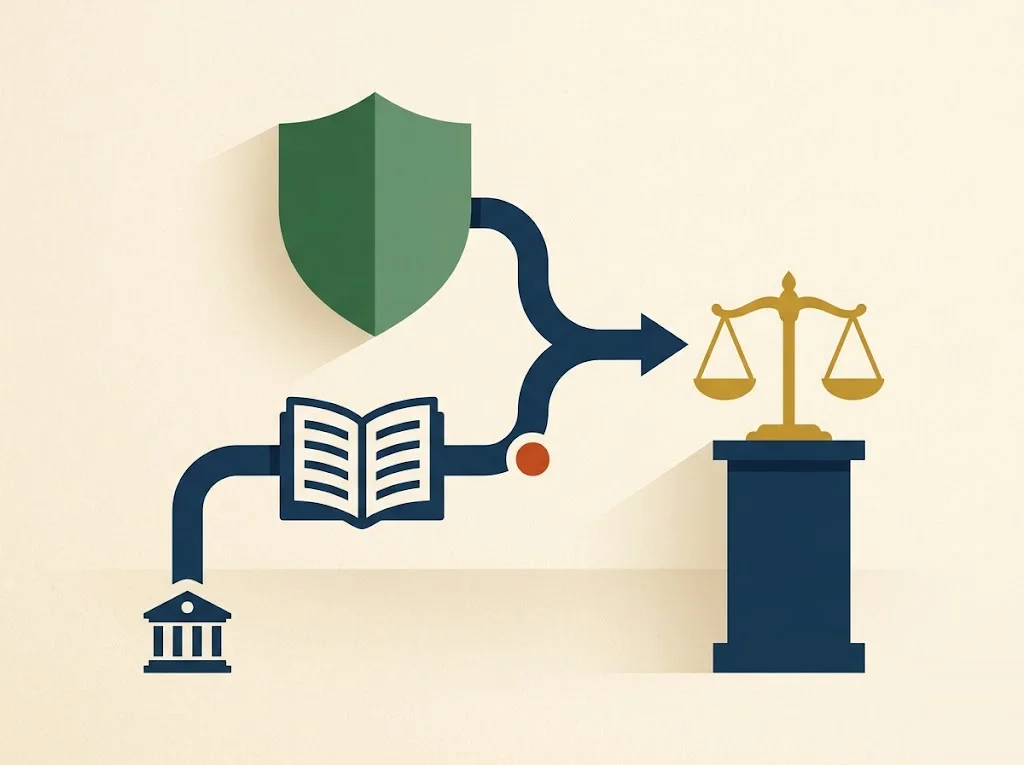
The short answer. 15 U.S.C. 1681s-2, titled “Responsibilities of furnishers of information to consumer reporting agencies,” is the section of the Fair Credit Reporting Act (FCRA) that governs the companies feeding data into your credit file. A furnisher is any entity that reports account information to the credit bureaus: your bank, an auto lender, a debt collector, or a debt buyer that purchased an old account for pennies on the dollar. The statute splits their duties into two subsections, (a) and (b), and the difference between them decides the single most consequential question a consumer can ask: whether you can take a furnisher to court when it gets your credit report wrong.
The split that consumer pages get wrong
The distinction most consumer guides miss is that 1681s-2 is not one uniform set of obligations. It is two sets with radically different enforcement. Subsection (a) describes duties that apply at all times, regardless of whether anyone has complained. A furnisher must not report information it knows, or has reasonable cause to believe, is inaccurate (a)(1). It must correct and update information it has already furnished (a)(2). It must tell the bureau when it has been notified of a dispute (a)(3). And for delinquent accounts it must report the date of delinquency (a)(5). These read like exactly the protections a consumer would want to enforce.
Here is the catch. Subsection (a) is, in the words of the statute, “enforced exclusively as provided under section 1681s … by the Federal agencies and officials and the State officials identified in section 1681s.” Sections 1681n and 1681o — the FCRA provisions that let an ordinary person sue for willful or negligent violations and recover damages — do not reach subsection (a) at all. Per 1681s-2(c) and (d), those civil-liability sections are carved out. A consumer therefore has no private right of action for an (a) violation. If a lender reports a debt it knows is wrong, you cannot personally sue it under (a). Only the Consumer Financial Protection Bureau, the Federal Trade Commission, and state regulators can act on that duty.
How subsection (b) gives you teeth
Subsection (b) is where a consumer gains the power to sue, and it activates only under one specific condition: a consumer reporting agency — a credit bureau — must first forward your dispute to the furnisher. That happens through the bureau-dispute machinery in 1681i(a)(2). When you dispute an item directly with Equifax, Experian, or TransUnion and the bureau passes the dispute along, the furnisher’s (b) duties switch on, and a breach of those duties is privately enforceable through 1681n and 1681o.
The five duties that 1681s-2(b)(1) imposes once a bureau forwards a dispute are the heart of the statute:
- (A) Conduct an investigation with respect to the disputed information.
- (B) Review all relevant information provided by the consumer reporting agency under 1681i(a)(2).
- (C) Report the results of that investigation back to the bureau.
- (D) If the investigation finds the information incomplete or inaccurate, report those results to every other credit bureau the furnisher supplied with the same data.
- (E) If an item is found inaccurate, incomplete, or unverifiable, promptly modify it, delete it, or permanently block its reporting. Once deleted, the item cannot return to the file unless the furnisher certifies it as complete and accurate, the precondition set by 1681i(a)(5)(B).
That fifth duty is the one that actually cleans your file. A furnisher cannot quietly conclude an item is wrong and leave it sitting on your report; it must fix, remove, or block it across every bureau it touched.
Why you should always go through the bureau
The practical lesson follows directly from the split. Many people fire off a letter to the lender or the collector — a direct dispute — and assume they have preserved every legal option. They have not. The FCRA does let you dispute directly with a furnisher: that right lives in (a)(8) and is fleshed out by the CFPB’s Regulation V at 12 C.F.R. 1022.43. But a direct dispute invokes the subsection (a) duties, and those carry no private right of action. A direct-only dispute can get an error corrected, yet it does nothing to preserve your ability to sue if the furnisher stonewalls.
To keep a furnisher legally accountable, dispute through a credit bureau, because only the bureau route triggers the privately-enforceable (b) duties. You can read the full mechanics of filing in our guide to disputing credit report errors, and the broader landscape of what the law guarantees you in FCRA consumer rights explained. It is also why the popular “magic words” letter culture overpromises — see why the 609 dispute letter is largely a myth and how the 623 dispute differs from the 611 bureau dispute. Section 609 is a disclosure right, not an investigation trigger; the lawsuit-bearing investigation lives in 1681s-2(b).
The modern teeth: no “parroting”
For years, furnishers treated the (b) investigation as a clerical match. They would pull up the disputed account in their own system, confirm the tradeline matched what they already had on file, and report back “verified” without examining whether the underlying information was actually correct. The CFPB shut that down in Consumer Financial Protection Circular 2022-07, “Reasonable Investigation of Consumer Reporting Disputes,” issued in November 2022. The circular makes clear that both furnishers and bureaus must conduct a reasonable investigation, and that a furnisher does not satisfy 1681s-2(b) by merely parroting — confirming the disputed item matches its own records without investigating the substance of the dispute. Neither side may evade the duty by demanding documents the statute does not require, and the bureau must forward all relevant information about the dispute, not just a bare notice that the consumer disagrees.
One date that controls everything
A final subsection worth knowing because it quietly governs how long damage lingers: (a)(5). For any account placed for collection or charged to profit and loss, the furnisher must report the date of delinquency — the month and year the delinquency began — within 90 days. That single date is not a footnote. It starts the seven-year reporting clock under 1681c(c), which is why a re-aged or misreported delinquency date can keep a derogatory item on your file long past its lawful expiration. We break down how that timeline interacts with debt collection in our guide to the charge-off statute of limitations. Get the date of delinquency wrong and a seven-year scar can stretch to nine or ten, which is precisely the kind of error the bureau-dispute route under (b) exists to force a furnisher to correct.
Quick answers
Can I sue a furnisher under 15 U.S.C. 1681s-2?
Only for violations of subsection (b), and only after you have disputed the item through a credit bureau. The bureau forwards your dispute, that triggers the furnisher's (b) investigation duties, and a breach of those duties is privately enforceable under 1681n and 1681o. Subsection (a) violations carry no private right of action.
What is the difference between 1681s-2(a) and 1681s-2(b)?
Subsection (a) lists duties that apply at all times — do not furnish information you know is inaccurate, correct and update it, report the date of delinquency. It is enforced exclusively by federal and state regulators, with no consumer lawsuit. Subsection (b) lists investigation duties triggered only after a bureau forwards a dispute, and those are privately enforceable.
What must a furnisher do after a dispute?
Once a credit bureau forwards a consumer dispute, 1681s-2(b)(1) requires the furnisher to investigate the disputed item, review all relevant information the bureau provided, report the results back to the bureau, notify every other bureau it reported to if the item is incomplete or inaccurate, and modify, delete, or permanently block any item found inaccurate, incomplete, or unverifiable.
Does disputing directly with the lender preserve my right to sue?
No. A direct dispute with the furnisher is the (a)(8) route, governed by the CFPB's Regulation V at 12 C.F.R. 1022.43. It invokes the subsection (a) duties, which have no private right of action. To preserve the ability to sue, you must dispute through a credit bureau so the privately-enforceable (b) duties are triggered.
Educational content only. finbarrow is an independent editorial publication, not a licensed financial advisor, broker, tax preparer, or attorney. Verify rates and terms with the issuer or relevant regulator. See disclaimers and funding disclosures.