Student loan servicers in 2026 — what borrowers need to know now
The student loan servicer landscape after SAVE ended: which servicers handle what, the new RAP plan, IDR recertification, and what to do now.
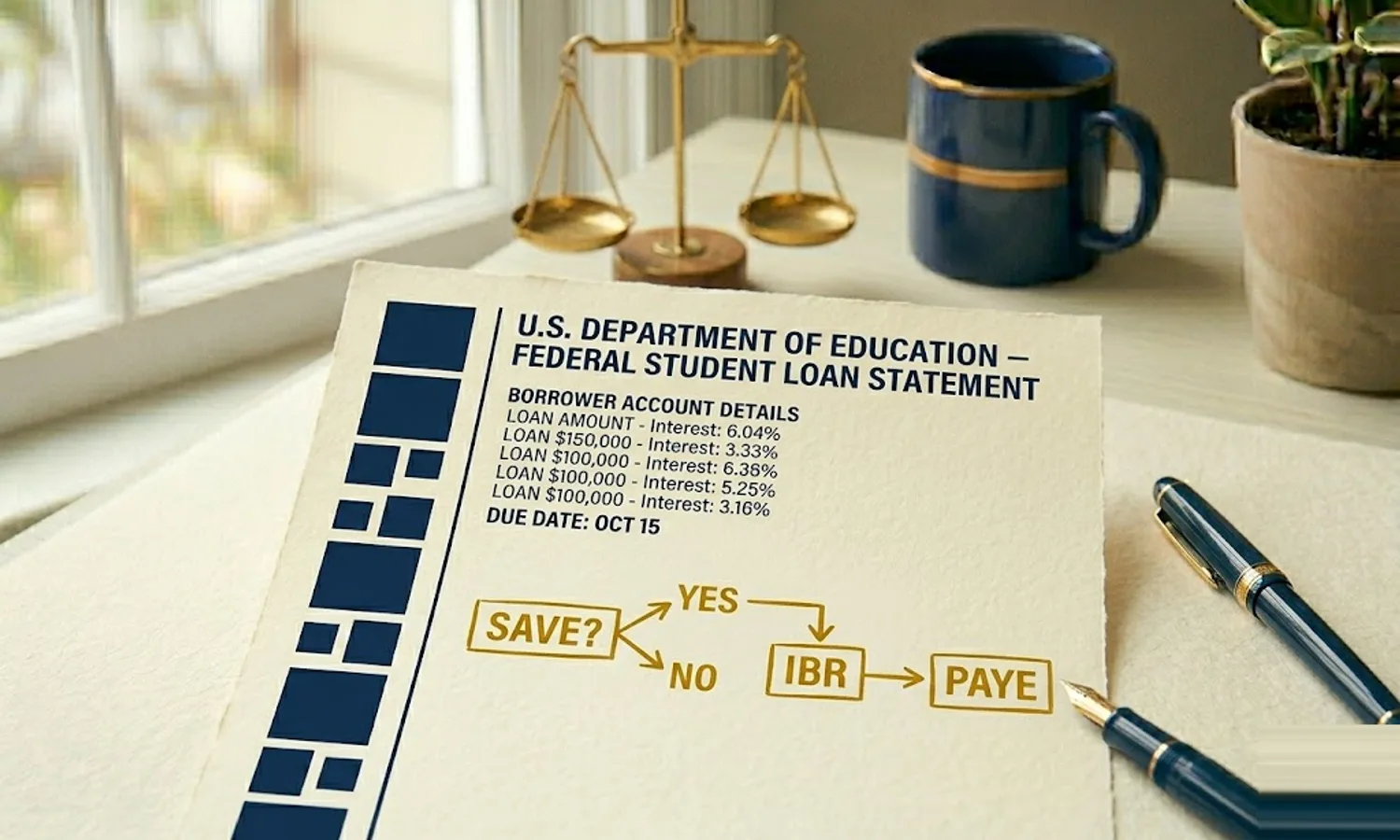
The student loan servicer landscape in the United States has changed more in the past three years than in the prior two decades. The end of the pandemic-era payment pause in October 2023, the rollout and subsequent termination of the SAVE plan, the arrival of the new Repayment Assistance Plan (RAP) on July 1, 2026, the transfer of millions of accounts between servicers, and the ongoing IDR recertification backlog have created a situation where many borrowers are unsure which company services their loans, what repayment plan they are on, and whether their payments toward forgiveness are being tracked correctly. This piece covers the current state of the servicer landscape and the specific actions borrowers should take this month.
The current servicer roster
The Department of Education contracts with a small number of companies to service federal student loans. As of mid-2026, the primary servicers are MOHELA (the largest by account volume after absorbing the Public Service Loan Forgiveness portfolio), Aidvantage (operated by Maximus, handling the accounts previously serviced by Navient’s federal portfolio), Nelnet, EdFinancial (a Nelnet subsidiary), and ECSI (handling smaller institutional Perkins loan portfolios). The Federal Student Aid website at studentaid.gov/manage-loans shows which servicer handles each borrower’s loans — this is the authoritative source, not old correspondence or prior login credentials.
Account transfers between servicers have been a persistent source of confusion and errors. When a portfolio moves from one servicer to another, the new servicer receives the loan data from the Department of Education, creates a new account, and sends the borrower a welcome letter with new login credentials. During the transition (typically 30-60 days), the borrower may be unable to access account details, make targeted payments, or verify IDR payment counts. The most important action during a transfer is to continue making payments on time — payments made during a transfer are credited retroactively, but missed payments during a transfer are not automatically forgiven.
The SAVE plan is terminated — borrowers must migrate by July 1, 2026
The SAVE plan (Saving on a Valuable Education, formerly REPAYE) was the Biden administration’s replacement for the older REPAYE income-driven repayment plan, with significantly more generous terms: payments calculated at 5% of discretionary income for undergraduate loans (down from 10%), a higher income exemption (225% of the federal poverty level instead of 150%), and accelerated forgiveness for small-balance borrowers (10 years instead of 20-25 years). The plan was fully implemented in July 2024 and immediately challenged in court by a coalition of state attorneys general.
SAVE is now defunct. Rather than remaining enjoined or in open litigation, the plan has been wound down: the Department of Education reached a settlement with Missouri and published the next steps for affected accounts. Borrowers who were enrolled in SAVE must choose a legal repayment plan, and the Department has directed servicers to move enrollment forward starting July 1, 2026. Treat SAVE not as a plan that might come back, but as one you have to leave — check your servicer portal now to see whether you have already been transitioned and which plan you have been placed on.
Just as important, the SAVE forbearance is no longer interest-free. Interest on SAVE loans resumed accruing on August 1, 2025, so the parking spot many borrowers sat in for over a year is now an administrative forbearance with interest running. That changes the math on waiting: every month spent in forbearance now adds to the balance, on top of the older problem that forbearance months generally do not count toward IDR forgiveness or PSLF qualifying payments. A borrower who spends 12 months in SAVE-related forbearance loses 12 months of forgiveness credit and watches the balance grow at the same time. For borrowers pursuing PSLF, moving into a qualifying repayment plan — even if the monthly payment is higher than the old SAVE payment would have been — both stops the interest drift relative to forbearance and preserves qualifying payment months. The IDR plans deep dive covers the payment formulas and plan-switching mechanics.
The new repayment menu — RAP, Tiered Standard, and what is sunsetting
The choices facing SAVE borrowers are different from a year ago. The One Big Beautiful Bill Act (P.L. 119-21, signed July 4, 2025) created the Repayment Assistance Plan (RAP), the new income-driven repayment option, available since July 1, 2026. RAP sets the monthly payment based on the borrower’s income and number of dependents, and — unlike the old SAVE forbearance now accruing interest — it is designed to protect borrowers from runaway interest as long as the scheduled payments are made on time. The same law introduces a new Tiered Standard plan, also effective July 1, 2026, as the fixed-schedule alternative.
The older menu is shrinking. PAYE and ICR are being sunset for loans taken out before July 1, 2026, with elimination expected around 2028, so they are no longer the plans to switch into for the long term. IBR remains available. The practical upshot: if you were planning to “switch to IBR or PAYE,” PAYE is no longer a durable destination — the new IDR option is RAP, with IBR as the surviving traditional plan. Borrowers pursuing PSLF should weigh RAP and IBR against each other on qualifying-payment terms rather than reaching for PAYE or ICR.
IDR recertification — the annual task borrowers skip at their peril
Income-driven repayment plans require annual recertification of the borrower’s income and family size. The servicer uses the recertified income (from the most recent tax return or a current pay stub) to recalculate the monthly payment for the following 12 months. Borrowers who fail to recertify are moved to the standard 10-year repayment plan, which produces a substantially higher monthly payment — often two to four times the IDR payment.
The recertification process was paused during the pandemic payment pause and has been gradually restarting since late 2023. Many borrowers who were auto-recertified during the pause (using prior-year tax data) are now facing their first manual recertification in three or more years. The servicer sends a notice 60-90 days before the recertification deadline, and the borrower completes the process through the servicer’s website or through studentaid.gov. If the borrower’s income has increased since the last recertification, the new payment will be higher — but it will still be capped at the percentage of discretionary income specified by the plan (10% for IBR/PAYE, 15% for old IBR, 20% for ICR).
Borrowers who have experienced a significant income reduction since their last tax return (job loss, reduced hours, transition to self-employment) can recertify using current income documentation (a recent pay stub or a signed statement) rather than the tax return. This produces a lower monthly payment that reflects the borrower’s current financial situation rather than the prior year’s income.
What to do now
Step 1: Verify your servicer. Log into studentaid.gov and confirm which company services your loans. If you have multiple loans, they may be split across servicers. Note the servicer’s contact information and website.
Step 2: Confirm your repayment plan. In your servicer’s portal, verify that you are on the repayment plan you intend to be on. If you were on SAVE, that plan is terminated — you must choose a legal repayment plan, with enrollment now open as of July 1, 2026. Evaluate the new Repayment Assistance Plan (RAP) and IBR rather than PAYE or ICR, which are being sunset. This is especially important if you are pursuing PSLF, where qualifying payment months are the most valuable currency, and if you have been parked in the SAVE forbearance, where interest has been accruing since August 1, 2025.
Step 3: Check your IDR recertification date. If recertification is due within the next 90 days, gather your most recent tax return or current pay documentation. Complete the recertification before the deadline to avoid being moved to the standard plan.
Step 4: Verify your payment count. If you are pursuing PSLF or IDR forgiveness, check the payment count on studentaid.gov. The Department of Education has been conducting ongoing payment count adjustments since the Limited PSLF Waiver and the IDR Account Adjustment. If your count seems lower than expected, submit a PSLF reconsideration request or contact your servicer for a detailed payment history.
Step 5: Evaluate refinancing carefully. Federal-to-private refinancing permanently forfeits access to IDR plans, PSLF, forbearance, and all federal borrower protections. In the current interest rate environment (private refinance rates of 5-8%), refinancing is generally only advisable for borrowers who have no interest in IDR or PSLF, have stable high income, and can secure a rate meaningfully below their federal weighted average rate. The IDR insurance value of keeping loans federal is highest for borrowers with income uncertainty or large balances relative to income.
Sources
- Federal Student Aid — Loan servicer contact information (accessed May 23, 2026)
- Department of Education — Income-Driven Repayment plan updates (accessed May 23, 2026)
- CFPB — Student loan servicing complaints and supervision (accessed May 23, 2026)
- Department of Education — SAVE plan litigation updates (accessed June 22, 2026)
- U.S. Department of Education — Next Steps for Borrowers Enrolled in the SAVE Plan (accessed June 22, 2026)
Related on finbarrow
- Loans & Mortgages
Auto, mortgage, personal, student — when refinancing actually pays.
Educational content only. finbarrow is an independent editorial publication, not a licensed financial advisor, broker, tax preparer, or attorney. Verify rates and terms with the issuer or relevant regulator. See disclaimers and funding disclosures.