SSA-1099 Lump-Sum Election: Tax on Back Payments
A Social Security back payment can be taxed using the lump-sum election on Form 1040 line 6c — no amended returns, just Publication 915 worksheets.
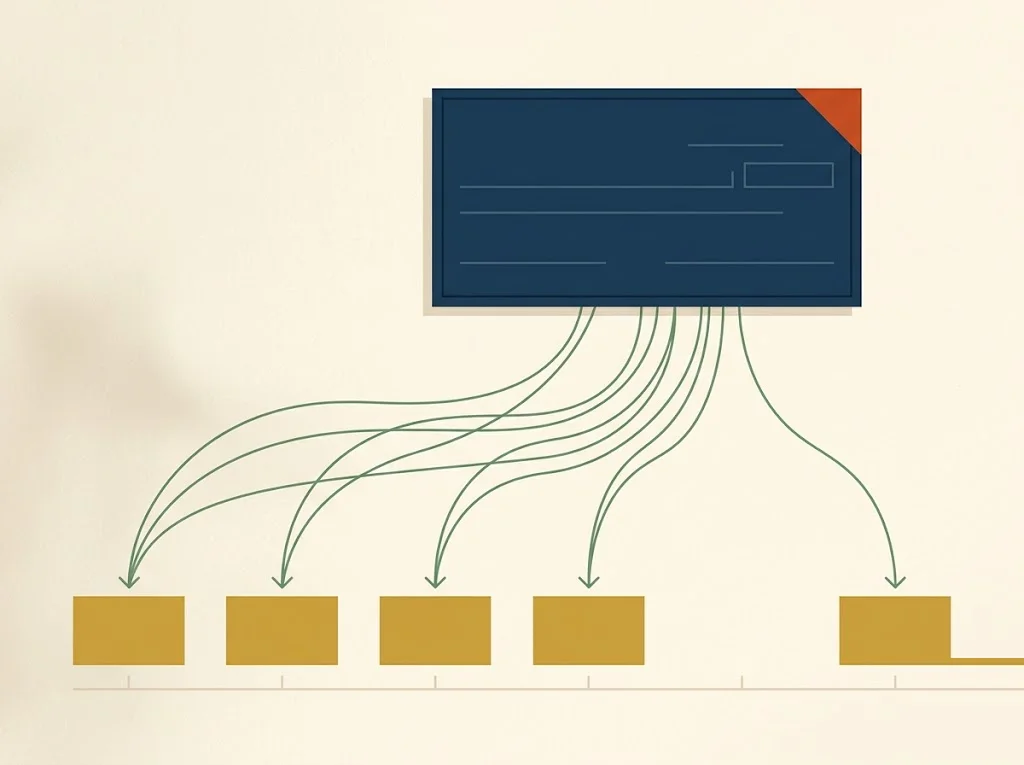
The approval letter took two years to arrive. By the time the Social Security Administration finally cleared a disability claim, it owed nearly three years of monthly benefits, and it paid them the way it usually does — in one large retroactive check. That is a relief after a long wait with no income. Then the SSA-1099 shows up in January, and the relief curdles into worry. The form crams the entire back payment into a single tax year, and combined with whatever else the household earned, it looks poised to trigger a tax bill far larger than any individual year of benefits ever would have produced.
The short answer: the tax code anticipated exactly this. Through the lump-sum election on Form 1040, line 6c, you can recompute the taxable portion of the back payment as if each year’s benefits had been received in that earlier year — without amending any prior-year return. You report everything on the current return and pay there; you are only borrowing the earlier years’ lower income to figure a smaller taxable amount. Because the election can never increase your tax, you use it only when it lowers the taxable portion.
Why a back payment inflates the tax
Social Security benefits are not automatically taxable, and they are never fully taxable. Depending on your “combined income” — roughly your other income plus tax-exempt interest plus half your benefits — anywhere from none to a maximum of 85% of benefits falls into the taxable range. The thresholds that govern this have never been indexed for inflation — $25,000 single and $32,000 joint since 1984 — so the more income you stack into one year, the more of your benefits cross into the taxable zone.
A back payment breaks the math precisely because it bunches several years of benefits into the year the check landed. Benefits that, spread across three calendar years, might have stayed mostly untaxed instead pile up at once. The bunched total pushes your combined income higher, and more of the benefits — potentially up to that 85% ceiling — become taxable than would have if the same dollars had trickled in on the original schedule.
Reading the SSA-1099
The form itself tells you how the money was allocated. Box 3 shows the total benefits the SSA paid you during the year, and right below it a section labeled “Description of Amount in Box 3” breaks that total down by the year each portion was actually for. That breakdown is the raw material for the election — it is how you know how many dollars belong to each prior year. Box 5 is the net benefits figure, and it is the number the worksheets use to determine the taxable amount. Before you do anything else, read the box 3 description carefully and note how much of the lump sum is attributable to each earlier year.
What the lump-sum election does
The election does not move income into the past, and it does not reopen old returns. What it does is let you compute the taxable portion of each prior year’s slice using that year’s combined income, then bring the sum of those smaller taxable amounts forward onto the current return. You are borrowing the earlier years’ lower income figures purely as a calculation input.
Everything still happens on the current year’s Form 1040. You report the full benefits there, and you pay any resulting tax there. The election only changes how much of the benefit counts as taxable — and by design it can only help. If running the prior-year computations produces a taxable amount equal to or larger than the regular method, you simply do not elect and lose nothing.
Running the Publication 915 worksheets
The arithmetic lives in IRS Publication 915. You first complete Worksheet 1, which figures the taxable amount the ordinary way, with the entire lump sum treated as current-year income. Then you complete Worksheets 2 through 4 — the lump-sum method — running one computation for each prior year that the box 3 breakdown identifies. At the end you compare the two results and keep the smaller taxable amount.
The catch is that each prior-year computation needs that year’s actual numbers, so dig out the old returns before you start. For every year a portion of the back payment is attributable to, you will need:
| From each prior year | Why it is needed |
|---|---|
| Filing status | Sets the combined-income thresholds for that year |
| Adjusted gross income (AGI) | Feeds the combined-income figure for that year |
| Tax-exempt interest | Added back into combined income |
| Benefits attributable to that year | Taken from the box 3 breakdown |
Without the prior-year filing status and AGI, the worksheets cannot run, so this is the step worth doing first.
Making the election on Form 1040
Once the worksheets show that the lump-sum method wins, claiming it is mechanical. On Form 1040 or 1040-SR, check the box on line 6c — that check is the election. There is no separate form to file. Enter the total benefits from Worksheet 1, line 1, on line 6a, and enter the taxable amount figured under the election on line 6b. When you make the election, the notation “LSE” prints next to line 6 to flag it. No amended returns accompany any of this; the entire transaction is reported on the current year’s return. The election is irrevocable for that year without IRS consent, so confirm the comparison before you check the box.
When it helps and when it does not
The election rewards a particular pattern: a claimant whose income in the back-payment years was low — often someone who was out of work while waiting on a disability decision. When those earlier years carried little other income, computing the benefits against that low base produces a much smaller taxable amount, and the election pays off handsomely.
It helps far less, or not at all, when the prior years were also high-income — a working spouse, investment income, or retirement distributions in those years. If the earlier years’ combined income was already high enough to tax 85% of the benefits anyway, recomputing against them gains nothing, and the regular Worksheet 1 method may already be your best result. That is exactly why Publication 915 has you run both and compare rather than assume.
A long wait for back pay is hard enough without a tax surprise on top of it. The lump-sum election exists so that a delay by the government does not cost you at tax time. Pull the old returns, run both methods through the Publication 915 worksheets, and check line 6c only if the numbers say to. For more on how the IRS treats these awards, see its Back Payments FAQ.
Quick answers
What is the lump-sum election for Social Security back pay?
It is a choice that lets you figure the taxable portion of a Social Security back payment as if each year of benefits had been received in that earlier year, rather than all at once in the year the check arrived. You still report and pay on the current return, but you borrow the prior years lower combined income to compute a smaller taxable amount. It never raises your tax, so you use it only if it lowers the taxable portion.
Do I have to file amended returns to use the lump-sum election?
No. The election does not amend any prior-year return. You report the entire back payment on the current years Form 1040 and pay any tax there; the earlier years filing status and income are used only inside the Publication 915 worksheets to compute the taxable amount. Nothing is refiled or reopened for those earlier years.
Where do I make the lump-sum election on Form 1040?
You check the box on Form 1040 or 1040-SR line 6c. There is no separate election form — checking that box is the election. You enter the total benefits from Worksheet 1, line 1, on line 6a and the taxable amount figured under the election on line 6b, and the notation LSE prints next to line 6.
How do I know if the lump-sum election lowers my tax?
You run both methods in Publication 915 and compare. Worksheet 1 figures the taxable amount the regular way, with everything bunched into the current year; Worksheets 2 through 4 figure it as if each years benefits had been received then. If the election produces a smaller taxable amount you check line 6c; if the regular method is equal or lower you simply do not elect.
Educational content only. finbarrow is an independent editorial publication, not a licensed financial advisor, broker, tax preparer, or attorney. Verify rates and terms with the issuer or relevant regulator. See disclaimers and funding disclosures.