Debt consolidation: balance transfer vs loan vs HELOC
Compare the three debt-consolidation methods on real cost — 0% balance transfer, personal loan, and HELOC — and see which clears $15,000 of card debt cheapest.
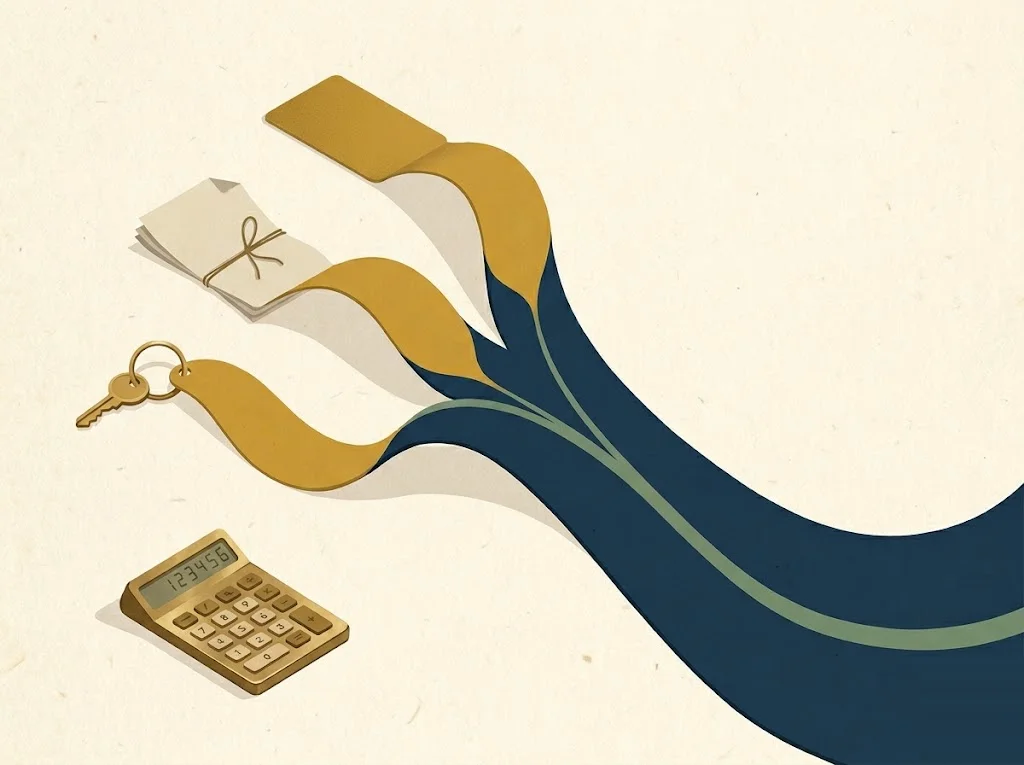
Debt consolidation is one of the most heavily marketed ideas in consumer finance, and also one of the most misunderstood. Banks, credit unions, and fintech lenders all promise to “simplify your payments” or “lower your interest,” and the pitch is appealing precisely because high-interest credit card debt is genuinely punishing. The average credit card account that carries a balance from month to month charged an annual percentage rate of 21.52% in the first quarter of 2026, according to the Federal Reserve’s G.19 Consumer Credit release. That figure is the single most important number in this entire discussion, because it is the rate that every consolidation method has to beat to be worth doing.
What the marketing rarely makes clear is that there is no single “debt consolidation product.” There are three genuinely different tools, each with a distinct cost structure, a distinct risk profile, and a distinct ideal borrower. A 0% balance transfer card moves card debt from one card to another and charges interest only after a promotional window closes. A fixed-rate personal loan replaces the revolving balance with an installment loan at a locked rate. A home equity line of credit, or HELOC, borrows against the value of your house at the lowest rate of the three — but pledges your home as collateral. Choosing among them without running the numbers is how borrowers end up paying more, not less.
For most borrowers carrying $15,000 or less in card debt who can repay within roughly two years and have good credit, a 0% balance transfer is the cheapest method by a wide margin — costing only the transfer fee, around $450 on $15,000, versus more than $2,700 in interest on a three-year personal loan. The personal loan wins when the balance is larger, the payoff horizon is longer, or the borrower wants a locked rate and a contractual payoff date. A HELOC delivers the lowest interest rate of all but converts unsecured debt into a loan secured by your home, so it suits only disciplined borrowers with stable income and real equity. None of the three methods does anything about the spending behavior that created the debt — that remains the borrower’s job.
This guide works through each method on its own terms, then puts all three side by side against a single, concrete problem: clearing $15,000 of credit card debt. The math is explicit throughout, because the entire point of consolidation is the difference between two numbers — the rate you pay now and the rate you would pay after — and that difference is invisible until you actually compute it.
What debt consolidation actually does — and the one thing it can’t do
Debt consolidation is, at its core, a refinancing operation. You take one or more existing balances — typically high-interest credit card balances — and you replace them with a single new obligation that, ideally, carries a lower interest rate, a more predictable payment, or both. The principal does not change. If you owe $15,000 across three credit cards and you consolidate, you still owe $15,000; you have simply changed who you owe it to and at what rate.
This is the distinction that trips up the most borrowers. Consolidation is sometimes confused with debt settlement, which is an entirely different process in which a third party negotiates with creditors to accept less than the full balance — usually wrecking your credit and generating a taxable forgiveness event in the process. Consolidation does none of that. It does not reduce the amount you owe, it does not involve negotiating with creditors, and it does not damage your credit the way settlement or default does. It reorganizes interest, not principal.
What consolidation can genuinely accomplish is meaningful. By lowering the rate, it changes how much of each payment goes to interest versus principal, which accelerates payoff and reduces total cost. By replacing several minimum payments with one fixed payment, it removes the cognitive load of juggling due dates and the risk of a missed payment triggering a penalty APR. And by moving revolving card balances onto an installment loan, it can lower your credit utilization — the percentage of your available card limits you are using — which is one of the largest inputs into a FICO score and can lift that score within a billing cycle or two.
But the one thing consolidation cannot do is fix the behavior that produced the debt. If the debt accumulated because spending consistently outran income, consolidation buys time and lowers the rate, but the underlying gap remains. This is not a minor footnote; it is the reason a large share of consolidation attempts fail. The borrower clears the cards, feels relieved, and then re-borrows on the now-empty cards — ending up with the consolidated balance plus a new one. Every method below assumes the borrower treats consolidation as a one-time repair, not a license to keep spending.
The number to beat: your credit card APR
Before evaluating any method, you have to know the rate you are escaping, because that rate is the benchmark against which every alternative is measured. For the average American carrying a balance, that rate was 21.52% in the first quarter of 2026, per the Federal Reserve’s G.19 series — and that is an average across accounts that assess interest, which means roughly half of balance-carrying cardholders pay even more. Penalty APRs, applied after a late payment, routinely run to 29.99%.
The reason 21.52% is so destructive is the way credit card interest compounds. Card interest accrues daily on the outstanding balance, and when you pay only the minimum, the balance barely moves, so next month’s interest is calculated on almost the same number. The result is a balance that can take decades to retire. We will see the precise figures in the worked comparison, but the headline is stark: $15,000 left at 21.52% and serviced with minimum payments can take roughly twenty-five years to clear and cost more in interest than the original balance. The mechanics of why minimum payments trap a balance this way are laid out in detail in our explainer on minimum payment math.
This sets a clear, quantitative test for every consolidation option. A method is worth pursuing only if its all-in cost — interest plus any fees — comes in materially below what you would pay by staying put. A 0% balance transfer charges a one-time fee but no interest during the promotion, so it clears the test easily for a fast payoff. A personal loan at 11% to 12% roughly halves the rate, so it clears the test by a comfortable margin. A HELOC at around 7.43% beats it by even more on rate alone. The only way to fail the test is to consolidate at a rate close to 21.52% — which is exactly what happens to borrowers with poor credit who accept the first “debt consolidation loan” offer that lands in their inbox without comparing the APR to the card they already hold. If the new rate is not clearly lower, consolidation is just motion without progress.
Method 1 — the 0% balance transfer card
A balance transfer moves an existing card balance onto a new credit card that offers a promotional 0% annual percentage rate for an introductory period. During that window, every dollar you pay reduces principal, because no interest accrues. The mechanics, including how the transfer is requested and how issuers treat new purchases on the same card, are covered in depth in our guide to balance transfer mechanics, but the cost structure is what matters for choosing a method.
There are two numbers to track. The first is the transfer fee, which the Consumer Financial Protection Bureau notes typically runs 3% to 5% of the amount transferred. On a $15,000 balance, that is $450 to $750 charged up front and added to the transferred balance. The second is the length of the 0% period. Federal law sets a floor — an introductory APR must last at least six months — but the strongest offers in 2026 run far longer. Cards such as the Wells Fargo Reflect, Citi Diamond Preferred, Chase Slate, and offerings from U.S. Bank and Bank of America have advertised promotional windows reaching up to twenty-one months. Most fall in the typical twelve-to-eighteen-month range.
The math is compelling when the balance fits the window. A 0% offer with a 3% fee converts a 21.52% problem into a $450 problem, provided you clear the balance before the promotion ends. That “provided” is the entire risk. When the introductory period expires, any remaining balance reverts to the card’s regular APR, which is frequently as high as the card you left — and you have paid a fee for nothing if you have not made real progress. A balance transfer is therefore best for a specific borrower: one with good-to-excellent credit (issuers reserve the long 0% offers for higher scores), a balance that fits under the new card’s credit limit, and a realistic plan to repay inside the window.
Two structural traps deserve emphasis. First, the freed-up original cards are now empty, and the temptation to use them is the single most common way a transfer backfires. Second, applicants chasing Chase’s best transfer cards run into the bank’s application restriction known as the Chase 5/24 rule, which declines applicants who have opened five or more cards across all issuers in the prior twenty-four months — a constraint that can quietly take a desired transfer card off the table.
Method 2 — the fixed-rate personal loan
A personal loan replaces revolving card debt with an installment loan: a fixed amount, a fixed interest rate, and a fixed monthly payment over a set term, usually two to five years. Unlike a credit card, it is unsecured by collateral and it amortizes — each payment is split between interest and principal on a published schedule, so the balance marches down to zero on a contractual date regardless of your willpower.
Rates are well below card APRs but above a HELOC. The Federal Reserve’s G.19 release put the average rate on a twenty-four-month personal loan at commercial banks at 11.40% in February 2026. Real-world rates depend heavily on credit profile; Bankrate’s June 2026 data showed roughly 12.27% for a borrower with a 700 FICO score taking a $5,000 loan over three years. A realistic planning range for a borrower with good credit is therefore about 11% to 12%. Many lenders also charge an origination fee, often 1% to 8% of the loan amount, deducted from the proceeds — a cost worth folding into the comparison the same way the transfer fee is folded into a balance transfer.
The defining advantage of a personal loan is discipline through structure. A balance transfer relies on you to set and maintain an aggressive payoff pace; a personal loan removes that decision by building the payoff into the contract. There is no promotional cliff to fall off, no reversion to a punitive rate, and no temptation to re-borrow the loan, because once disbursed it cannot be drawn on again. For a borrower who has struggled with the open-ended nature of revolving credit, that rigidity is the feature, not a limitation.
The personal loan is the natural choice in several situations the balance transfer cannot serve. It accommodates larger balances that exceed any single card’s credit limit. It fits longer payoff horizons of three to five years, where no 0% promotion lasts long enough. And it is available to borrowers who do not own a home and therefore cannot use a HELOC. The trade-off is straightforward: you pay real interest from day one, rather than just a one-time fee, so on a balance small enough to clear inside a 0% window, the loan is more expensive. Its value shows up when the balance or the timeline outgrows what a transfer can handle.
Method 3 — the HELOC
A home equity line of credit lets a homeowner borrow against the equity in their house — the difference between the home’s market value and the mortgage balance — up to an approved credit limit, drawing funds as needed and paying interest only on what is drawn. Because the loan is secured by real estate, lenders price it far below unsecured options. Bankrate’s June 2026 data put the national average HELOC rate at 7.43%, roughly a third of the average card APR and several points below a typical personal loan.
That rate advantage is real, and on a large balance it compounds into meaningful savings. But a HELOC carries two features that a balance transfer and a personal loan do not. The first is collateral. A credit card balance is unsecured; if the worst happens, it can be discharged in bankruptcy and no specific asset is forfeited. A HELOC converts that unsecured balance into debt attached to your home, and missing enough payments can ultimately lead to foreclosure. Trading a 21.52% unsecured rate for a 7.43% secured rate looks like an obvious win on the spreadsheet, but the spreadsheet does not price the risk of losing the house if income falters.
The second feature is variability. A HELOC rate is almost always variable, tied to the prime rate, so the 7.43% you start with can climb if the Federal Reserve raises rates — unlike the locked rate of a personal loan or the fixed 0% of a transfer promotion. HELOCs also involve closing costs, often 2% to 5% of the line, although many lenders waive them, and qualifying requires re-clearing the lender’s underwriting, including a debt-to-income assessment that compares your monthly obligations to your gross monthly income. Borrowers weighing a HELOC specifically for consolidation should also understand how it differs from pulling equity through a refinance; our comparison of a HELOC versus a cash-out refinance lays out when each makes sense.
The ideal HELOC borrower, then, is narrow: a homeowner with substantial equity, stable and reliable income, the discipline to repay rather than treat the line as a revolving spending account, and the temperament to accept that the family home now backs what used to be card debt. For that borrower, the HELOC is the cheapest tool available. For everyone else, the rate saving rarely outweighs the collateral risk.
The worked comparison: clearing $15,000 across the three methods
Abstract rate comparisons only become decisions when applied to a real balance. Consider a borrower with $15,000 of credit card debt at the 21.52% average APR, and walk through each path.
The baseline — do nothing and pay the minimum. Suppose the minimum payment is the common formula of accrued interest plus 1% of the balance, with a $35 floor. The first month’s interest alone is $15,000 times 21.52% divided by twelve, or $269, making the first minimum payment about $419. Because the balance shrinks so slowly, this path takes roughly 305 months — about twenty-five years — to clear, and racks up approximately $25,400 in interest. The borrower repays more than $40,000 to retire a $15,000 balance. This is the number every other method is racing to beat.
Method (a) — 0% balance transfer for 21 months, 3% fee. The transfer fee is 3% of $15,000, or $450, added to the balance for a total of $15,450. To clear that inside the 21-month promotional window requires a payment of $15,450 divided by 21, or about $735.71 per month. During the promotion no interest accrues, so the total finance cost is the fee alone: $450. Total repaid: $15,450. Compared with the do-nothing baseline, the borrower saves roughly $25,000 in interest — and pays the balance in under two years instead of twenty-five.
Method (b) — personal loan at 11.40% over 3 years. Amortizing $15,000 at 11.40% over 36 months produces a monthly payment of about $493.93. Over the full term the borrower repays about $17,781, of which $2,781 is interest. At the higher end of the realistic range, around 12%, the interest rises to roughly $2,936. Either way, the loan costs over $2,300 more than the balance transfer — but it carries no promotional cliff, no reversion rate, and a payment about $240 a month lower, which can matter for cash flow.
Method (c) — HELOC at 7.43% over 3 years. Amortizing the same $15,000 at 7.43% over 36 months gives a monthly payment of about $466.11 and total interest of roughly $1,780 — the lowest interest of the three methods on an apples-to-apples three-year payoff. The catch is the structure: stretched over a typical ten-year HELOC horizon, the monthly payment drops to about $178, but total interest balloons to roughly $6,301, because low payments over a long term let interest accumulate. And these figures exclude closing costs of $300 to $750 (2% to 5% of a $15,000 line) where charged, plus the standing risk that the variable rate climbs and the home is collateral.
Lined up directly, the ranking on a three-year payoff is unambiguous: the balance transfer costs $450, the HELOC costs about $1,780, and the personal loan costs about $2,781 — and all three are dramatically cheaper than the roughly $25,400 of doing nothing. The transfer wins on cost; the HELOC wins on rate but loses on risk and discipline; the personal loan costs the most among the three but asks the least of the borrower’s willpower. You can run your own balance and rate through our balance transfer savings calculator and our credit card payoff calculator to see how the numbers shift for your situation.
Which method fits your situation
The right method is not the one with the lowest rate in the abstract; it is the one whose cost structure and risk profile match your balance, your timeline, your credit, and whether you own a home. Four variables drive the decision.
Start with the size of the balance. If it is small enough to fit under a single card’s credit limit — generally $15,000 or less for most approved limits — a balance transfer is on the table. If it is larger, or spread across so many cards that no single new card could absorb it, a personal loan or HELOC becomes necessary because the transfer simply cannot hold the balance.
Next, consider the payoff horizon. If you can realistically retire the balance within twelve to twenty-one months, the 0% transfer is almost always cheapest, since you pay only the fee. If you need three to five years, the transfer’s promotion will expire long before you finish, and a fixed-rate personal loan — or a HELOC, if you own a home — is the disciplined choice, because the rate is locked or low for the full term rather than reverting mid-payoff.
Then weigh your credit profile. The long 0% transfer offers and the best personal-loan rates are reserved for good-to-excellent scores. A borrower with a fair or rebuilding score may not qualify for a 0% transfer at all and may face a personal-loan rate uncomfortably close to their card APR — in which case consolidation barely helps, and the better move is an aggressive payoff on the existing card while the score recovers.
Finally, factor in homeownership. A HELOC is available only to owners with equity, and it should be chosen only by those with stable income and the discipline to repay rather than re-draw. For a renter, or for a homeowner unwilling to pledge the house, the HELOC is off the table regardless of how attractive its rate looks. Run through these four variables in order and the field usually narrows to a single sensible option.
The trap that undoes consolidation: not changing the spending behavior
Every method above lowers the rate on existing debt. Not one of them touches the reason the debt exists. This is the failure mode that turns a sound financial move into a deeper hole, and it deserves the last and longest word, because it sinks more consolidation attempts than any wrong rate calculation.
The pattern is predictable. A borrower consolidates $15,000 of card balances onto a 0% transfer card or a personal loan. The monthly payment drops, the high-interest pressure lifts, and a sense of relief sets in. The original cards now show zero balances and full available credit. Within a few months, ordinary spending — or a single emergency met with plastic instead of savings — pushes a balance back onto those cards. Now the borrower carries the consolidated balance and a fresh card balance, for more total debt than before consolidation, often at a worse blended rate once the new card balances start accruing at full APR.
Avoiding the trap is a behavioral problem, not a financial one, and it has behavioral solutions. The first is to treat consolidation as a one-time event paired with a written budget that closes the gap between income and spending — because if that gap stays open, no rate in the world prevents the debt from reaccumulating. The second is to physically remove the temptation: leave the paid-off cards at home, freeze them, or in extreme cases close the newest one (accepting the small, temporary score hit from the change in available credit). The third is to build even a modest emergency fund in parallel, so the next unexpected expense is met with cash rather than a card, since the most common reason freed-up cards get used again is an emergency with no buffer behind it. The mechanics of how a small revolving balance silently compounds back into a large one, and why minimum payments fail to contain it, are worth revisiting in our guide to minimum payment math.
The honest framing is that consolidation is a tool for borrowers who have already, or are genuinely ready to, change the behavior that created the debt. For that borrower, the rate reduction is decisive and the savings are real — tens of thousands of dollars over the life of a balance. For the borrower who consolidates without changing anything else, it is at best a temporary reprieve and at worst an accelerant. The spreadsheet picks the cheapest method; only the borrower can make any method work.
Sources
- Federal Reserve, “Consumer Credit — G.19” (credit card APR 21.52% Q1 2026; 24-month personal loan 11.40%), federalreserve.gov/releases/g19/ (current as of 2026).
- Bankrate, “Current HELOC Rates” (7.43% national average, June 2026), bankrate.com/home-equity/heloc-rates/.
- Bankrate, “Average Personal Loan Interest Rates” (June 2026), bankrate.com/loans/personal-loans/average-personal-loan-rates/.
- Consumer Financial Protection Bureau, “What is a balance transfer fee?”, consumerfinance.gov/ask-cfpb/.
Quick answers
Does debt consolidation hurt your credit?
In the short term, usually yes — by a few points and only temporarily. Every consolidation method begins with a hard inquiry, which typically shaves five points or fewer from a FICO score and fades within a year. A new balance transfer card or personal loan also lowers the average age of your accounts, which is a minor scoring factor. But the longer-term effect is frequently positive. Moving revolving card balances onto an installment loan drops your credit utilization — the share of your available card limits you are using — and utilization is roughly thirty percent of a FICO score. A cardholder who pays $15,000 of card balances down to zero by funding them with a personal loan can see their score rise within one to two billing cycles, because the loan does not count toward revolving utilization the way the cards did.
Is a balance transfer or a personal loan better for paying off credit card debt?
A balance transfer wins on raw cost when you can clear the balance inside the promotional window. On $15,000, a 0% transfer with a 3% fee costs $450 in total finance charges; a personal loan at 11.40% over three years costs roughly $2,781 in interest. The transfer is more than $2,300 cheaper. But the transfer only works if two conditions hold: your balance fits under the card's credit limit, and you can realistically pay it off before the 0% period — usually twelve to twenty-one months — expires. If the balance is larger than a card limit, or you need four or five years to repay, the fixed-rate personal loan is the more honest choice because its rate is locked and its payoff date is contractual rather than dependent on your discipline.
Can I use a HELOC to pay off credit card debt, and should I?
You can, and the interest rate is usually the lowest of any consolidation method — a national average around 7.43% in mid-2026 versus 21.52% on the average card. The catch is the collateral. A HELOC is secured by your home, so converting unsecured card debt into a HELOC means a balance you could once have discharged in bankruptcy is now attached to the roof over your head. Miss enough payments and the lender can foreclose. A HELOC also carries closing costs (often two to five percent of the line, though many lenders waive them) and a variable rate tied to the prime rate, so the payment can rise. For a disciplined borrower with substantial home equity and a stable income, a HELOC is the cheapest option. For anyone whose income is uncertain, the rate saving rarely justifies risking the house.
How much can debt consolidation actually save me?
It depends entirely on the gap between your current card APR and the consolidation rate, and on how fast you repay. Carrying $15,000 at the 21.52% average card APR while paying only the minimum can take about twenty-five years and cost more than $25,000 in interest — more than the original balance. Consolidating that same $15,000 into a 0% balance transfer (21-month payoff) costs $450. A 36-month personal loan at 11.40% costs about $2,781 in interest. A HELOC at 7.43% over the same three years costs about $1,780. The saving versus paying the minimum is enormous — well over $20,000 in every case — but most of that saving comes from committing to a fixed, faster payoff schedule, not from the lower rate alone.
Will consolidating my debt stop me from getting into debt again?
No. Consolidation reorganizes the interest on a balance you already owe; it does nothing to the spending pattern that created the balance. The most common and most expensive failure in debt consolidation is the borrower who transfers $15,000 of card balances to a 0% card or a personal loan, feels the relief of a lower payment, and then runs the now-empty cards back up. They end up with the consolidated balance plus a fresh card balance — more total debt than they started with. The math of any consolidation method only works if the freed-up cards stay near zero. Treat consolidation as a one-time repair, pair it with a written budget, and if necessary leave the paid-off cards out of your wallet until the consolidated balance is gone.
Educational content only. finbarrow is an independent editorial publication, not a licensed financial advisor, broker, tax preparer, or attorney. Verify rates and terms with the issuer or relevant regulator. See disclaimers and funding disclosures.