CFPB vs FTC vs state AG: where to send a credit complaint
Which agency actually helps: the CFPB gets a company response, the FTC builds your identity-theft record, the state AG adds state-law muscle. A routing map.
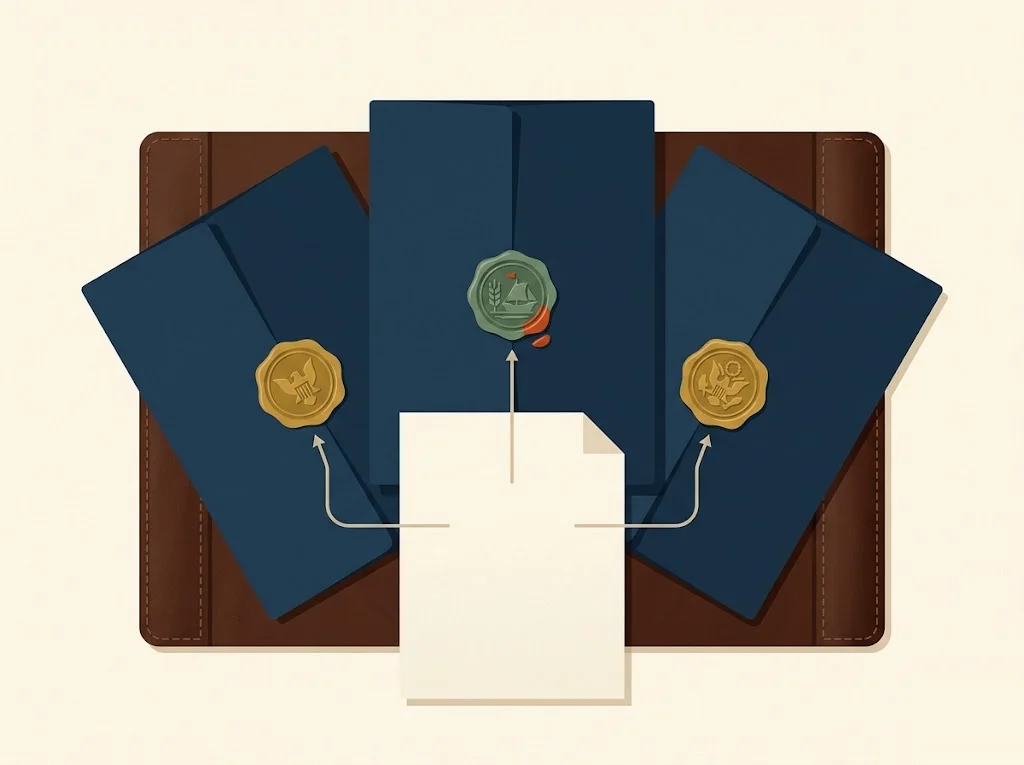
The short answer. Three different bodies handle what people loosely call “credit complaints,” and they do different jobs. The Consumer Financial Protection Bureau (CFPB) is the one that gets you a tracked response from the company itself. The Federal Trade Commission (FTC) builds your identity-theft and fraud record but does not resolve your individual case. Your state Attorney General (AG) adds state-law muscle and can run in parallel. Send your complaint to the wrong one and you lose weeks.
Why the agency you pick matters
It is tempting to treat “report it to the government” as a single action, fire off one email, and wait. The problem is that the federal consumer-protection system is not one desk — it is three, and each was built for a different purpose. Sending an identity-theft case to the channel meant for billing disputes, or a stalled bureau dispute to the channel meant for scam statistics, does not get you a faster answer. It usually gets you no answer at all, because that office was never going to do the thing you needed. The good news is that the routing is learnable in about five minutes, and once you know it, you stop wasting time on the wrong door.
The CFPB: the channel that gets a company to respond
The Consumer Financial Protection Bureau, at consumerfinance.gov/complaint, handles complaints about financial products and services — credit cards, credit reports, mortgages, student and personal loans, bank accounts, debt collection, and prepaid cards. What makes it different from the others is the mechanism. When you submit a complaint, the CFPB forwards it directly to the company, and the company generally responds within 15 days, providing a final response within 60 days when more time is needed. You then get to give feedback on that response, and the complaint, anonymized, is published in the public Consumer Complaint Database.
That forwarding step is the whole point. This is the one channel that reliably produces a documented answer from the business you are fighting — which is exactly the leverage you want when a credit bureau or a furnisher is stonewalling a dispute. If you have already tried to dispute the credit-report error and the bureau has gone quiet, a CFPB complaint is the backstop that puts the company on a clock.
One boundary worth noting: the CFPB itself points consumers to the FTC for scams and fraud. It is not the catch-all. For the rights that sit underneath a credit-report fight in the first place, see the overview of your FCRA consumer rights.
The FTC: recovery and a record, not a referee
The Federal Trade Commission gives you two tools, and it is important to understand what each one is for, because neither one resolves your individual dispute.
The first is IdentityTheft.gov. If you are a victim of identity theft, it builds a personal recovery plan and, crucially, generates an FTC Identity Theft Report. That report is not a formality — it is the official document that powers the Fair Credit Reporting Act identity-theft block, the mechanism that forces a bureau to remove a fraudulent tradeline from your file. If someone opened accounts in your name, this is where you start, because without that report the block has nothing to stand on. The downstream step lives in the FCRA identity-theft block, where the FTC Identity Theft Report is precisely what powers the removal.
The second is ReportFraud.ftc.gov, for scams and fraud you want on the record. It feeds the Consumer Sentinel database, which the FTC shares with law enforcement. That is its value: enforcement intelligence, not personal restitution.
Here is the part people miss. The FTC does not resolve your dispute and does not get you a company response. It is a reporting, recovery, and enforcement channel — not a mediator. If your goal is to make a specific company answer you, the FTC is the wrong room. If your goal is to build the documentary record that unlocks the identity-theft block, or to put a scam on the books for investigators, it is exactly right.
The state Attorney General: state-law muscle, often in parallel
Your state Attorney General’s consumer-protection division takes complaints, can mediate with a company, and enforces state consumer-protection and debt-collection laws — which sometimes reach further than federal law. That last point is the one to remember. Federal rules set a floor, not a ceiling, and a number of states layer on stronger debt-collection and consumer-protection statutes on top.
The state AG earns its place in three situations: when the conduct is a pattern rather than a one-off, when your state’s law is simply stronger than the federal equivalent, or when the federal channels have stalled and you want a second authority leaning on the company. And because these channels are not mutually exclusive, a state AG complaint can run at the same time as a CFPB complaint about the very same issue — two pressure points instead of one.
The routing map
Strip away the detail and the decision is short:
- A credit-report error, or a credit-card or loan billing or servicing problem — especially after a dispute has stalled — goes to the CFPB, because that is where you get a tracked company response.
- Identity theft, meaning fraudulent accounts opened in your name, goes to the FTC’s IdentityTheft.gov first, to generate the FTC Identity Theft Report. You then use that report for the credit-report identity-theft block and, if needed, a CFPB complaint.
- A scam or fraud you want on the record goes to the FTC’s ReportFraud.
- A pattern of misconduct, or any situation where you want state-law muscle, goes to your State Attorney General — and this one can run in parallel with a CFPB complaint.
The throughline is that these are not competing options to agonize over. They are specialized tools, and the strongest move is often to use more than one: file with the FTC to build the record, file with the CFPB to force a response, and bring in the state AG when the pattern or the law warrants it. Match the tool to the job and the system that looks like a maze turns into a fairly direct path.
Quick answers
Which agency gets the company to actually respond to me?
Only the Consumer Financial Protection Bureau (CFPB). When you submit a complaint at consumerfinance.gov/complaint, the CFPB forwards it to the company, which generally responds within 15 days and provides a final response within 60 days when more time is needed. The Federal Trade Commission (FTC) does not get you a company response — it is a reporting and recovery channel, not a mediator.
Where do I report identity theft so I can remove a fraudulent account?
Start at the FTC's IdentityTheft.gov. It builds a personal recovery plan and generates an FTC Identity Theft Report — the official document that powers the Fair Credit Reporting Act identity-theft block that forces a bureau to remove a fraudulent tradeline. You then use that report for the credit-report block and, if needed, a CFPB complaint.
Can I file with the CFPB and my state Attorney General at the same time?
Yes. These channels are not mutually exclusive. You can file a CFPB complaint and a State Attorney General complaint about the same issue at the same time, which is worth doing when the conduct is a pattern or when your state's law reaches further than federal law.
My dispute with a credit bureau has stalled. Who do I go to?
The CFPB. A credit-report error — especially after a dispute has stalled — goes to the CFPB because you get a tracked company response, which is the strongest lever when a bureau or a furnisher is stonewalling.
Educational content only. finbarrow is an independent editorial publication, not a licensed financial advisor, broker, tax preparer, or attorney. Verify rates and terms with the issuer or relevant regulator. See disclaimers and funding disclosures.