Defaulted Student Loans: What Changes in 2026
Federal student-loan collections were paused in January 2026. What the Treasury Offset and 15% wage garnishment mean for borrowers in default.
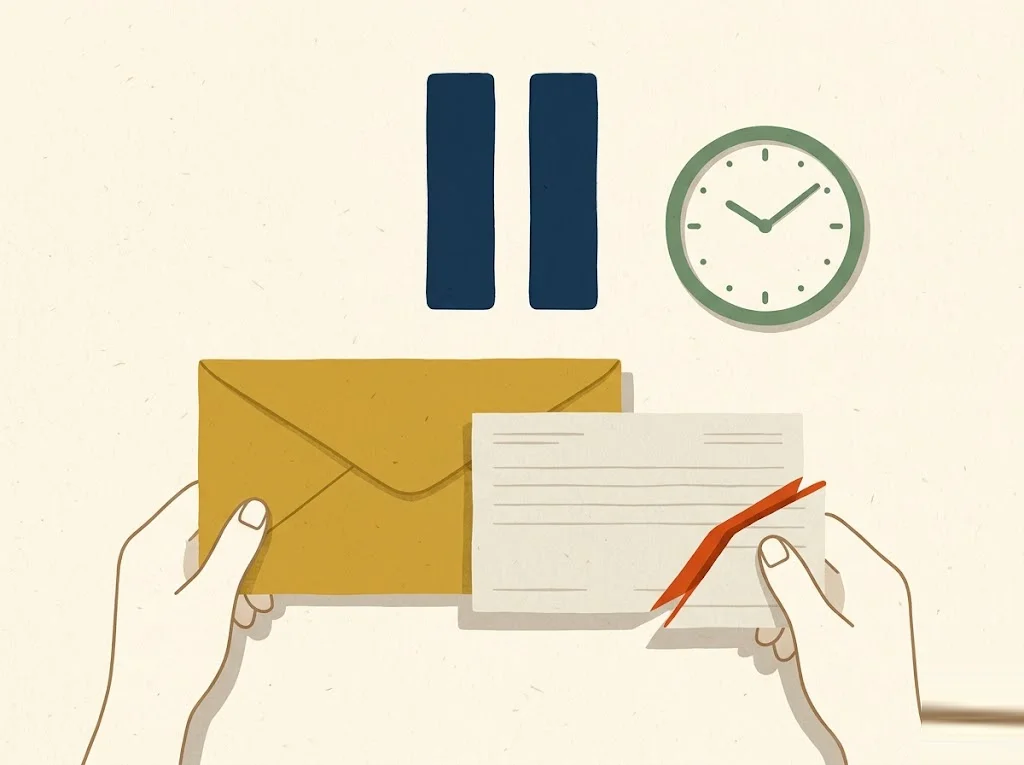
As of June 2026, the question of when the federal government will resume collecting on defaulted student loans does not have a firm answer. Involuntary collections were paused at the start of the year, but the pause was framed as temporary, and no agency has put a restart date on the calendar. For the millions of borrowers whose loans slipped back into default as pandemic-era protections expired, that leaves an awkward stretch of calm: the collection tools that can seize a tax refund or skim a paycheck are switched off for now, but the underlying default has not gone anywhere.
The practical reading is straightforward. A lull is not a resolution. The borrowers who come out of this period in the best shape will be the ones who treat the pause as a window to fix the default itself, rather than as a reason to stop thinking about it. The mechanics are not complicated, the official contacts are publicly listed, and the steps that remove these collection tools permanently are the same whether the restart comes in a month or in a year.
What happened
On January 16, 2026, the U.S. Department of Education announced a temporary pause on involuntary collections for defaulted federal student loans. The pause covers the three tools the government uses to collect without going to court: Treasury offsets, administrative wage garnishment, and the seizure of certain federal benefits. In plain terms, while the pause holds, the government is not pulling defaulted borrowers’ tax refunds, garnishing their wages, or offsetting their federal benefit payments to satisfy these debts.
What the January announcement did not include was an end date. As of mid-July 2026, the Department has not confirmed when involuntary collections will restart. This is an evolving situation, and the absence of a restart date should be read as exactly that — an absence, not a guarantee of indefinite relief. Borrowers should expect the pause to lift at some point and treat any future announcement as the trigger, not as a surprise.
Separately, a new repayment plan — the Repayment Assistance Plan (RAP), created by the One Big Beautiful Bill Act — launched on July 1, 2026. That plan matters for borrowers trying to stay current going forward, but it is a different track from resolving an existing default. Exiting default and choosing a repayment plan are two distinct steps, and the first has to come before the second can do any good.
What is at stake when collections resume
The reason the pause is worth using is that the collection tools behind it are unusually blunt. They operate without a court order and, in some cases, without any protected minimum.
The Treasury Offset Program is the sharpest of the three. When a federal student loan is in default, the program can intercept the borrower’s entire federal tax refund to apply against the debt. That includes refundable credits that many households count on, such as the Earned Income Tax Credit and the Child Tax Credit. There is no protected amount carved out for hardship, and no judge has to sign off first. The same program can also offset Social Security benefits and other federal payments.
The second tool is administrative wage garnishment. Under it, the government can direct an employer to withhold up to 15% of a borrower’s disposable pay and send it toward the defaulted balance — again, without a court judgment. The process is not instantaneous: the borrower receives notice and an opportunity to object or to set up a payment arrangement before garnishment begins. That notice is the moment to act, not to ignore. As the CFPB explains, these consequences attach specifically to loans that have entered default, which is why getting out of default is the only durable fix.
The window to act
The way to switch these tools off permanently is to leave default, and there are two routes. Loan rehabilitation requires nine on-time, voluntary monthly payments over a ten-month period; once completed, it removes the default notation from the borrower’s credit report. Consolidation is faster — it can resolve the default in weeks rather than months — but the trade-off is that the default record stays on the credit history. Rehabilitation is slower and cleaner; consolidation is quicker and leaves a mark. The right choice depends on whether speed or a clean report matters more for a given borrower’s situation. The full walkthrough of both paths, including eligibility details, is in our guide to how to get out of student loan default in 2026.
One option that no longer exists is Fresh Start, the temporary federal program that previously let defaulted borrowers return to good standing with fewer steps. Fresh Start ended on October 2, 2024, and it is not coming back for this cycle. Any advice that still points to it is out of date. The current routes out of default are rehabilitation and consolidation, full stop, and both run through the Department of Education’s Get Out of Default resources.
Dates to watch
Two dates frame the months ahead. The first is firm: July 1, 2026, the launch of the new Repayment Assistance Plan (RAP) under the One Big Beautiful Bill Act, which is the date forward-looking borrowers will use to pick a sustainable monthly payment once they are out of default. The second is not firm at all: the eventual restart of involuntary collections, which has no confirmed date as of June 2026. For that one, the only reliable approach is to watch the official sources directly — Federal Student Aid and the Department of Education — rather than relying on secondhand reports of a restart that has not been scheduled.
The asymmetry between those two dates is the whole point. One is a planning milestone; the other is a deadline with no number on it yet. Borrowers who wait for the second date to be announced before acting will be acting under pressure. Borrowers who use the current pause will not.
If your loans are in default, the most useful move this week is a phone call. The Department of Education’s Default Resolution Group can walk through rehabilitation and consolidation at 1-800-621-3115, and the Treasury Offset Program call center can confirm whether an offset is already flagged against your account at 800-304-3107. The pause has bought defaulted borrowers some time. The borrowers who come out ahead will be the ones who spend it, rather than wait for the restart notice to arrive.
Sources
- Federal Student Aid — Get Out of Default (accessed June 21, 2026)
- CFPB — What is a student loan default (accessed June 21, 2026)
- U.S. Treasury — Treasury Offset Program (accessed June 21, 2026)
Related on finbarrow
- Loans & Mortgages
Auto, mortgage, personal, student — when refinancing actually pays.
Educational content only. finbarrow is an independent editorial publication, not a licensed financial advisor, broker, tax preparer, or attorney. Verify rates and terms with the issuer or relevant regulator. See disclaimers and funding disclosures.