FOMC minutes — the three-week-late confession the dots only hint at
How to read the FOMC meeting minutes when they drop three weeks after each policy decision: what the dot plot left unsaid and the language clues that matter.
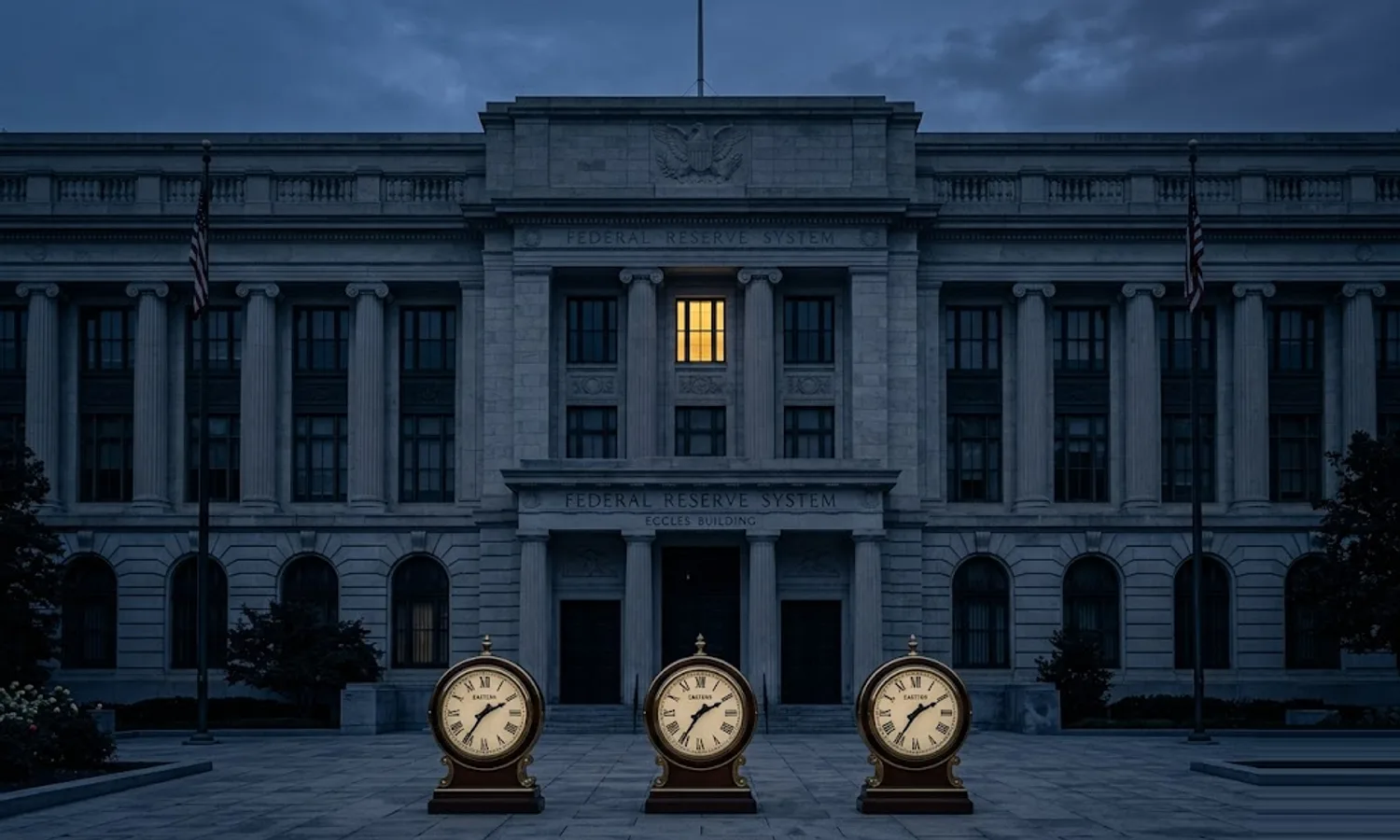
Every Federal Open Market Committee meeting produces three artifacts of decreasing immediacy: the policy statement released at 2:00 PM Eastern on day two of the meeting, the Chair’s press conference 30 minutes later, and the meeting minutes released three weeks afterward. For savers who already track the dot plot at each quarterly Summary of Economic Projections release — covered in our dot plot reading framework — the minutes are the second-most-useful Fed artifact of the quarter. They confirm or contradict what the dots implied, surface the dissents and concerns that the policy statement smoothed over, and contain the conditional language that hints at what would trigger the next move.
This piece is a reusable framework for reading FOMC minutes when they hit the Federal Reserve website at 2:00 PM Eastern, three Wednesdays after the policy decision. The framework applies to every release; only the meeting-specific language changes.
Why the minutes matter even after the statement and press conference
The FOMC policy statement is a few paragraphs of carefully calibrated language voted on by all participating members. It is consensus prose — every word negotiated, every disagreement smoothed away. The Chair’s press conference is one person’s interpretation of that consensus, plus answers to journalist questions, plus the Chair’s personal read on the data. Neither tells you what the actual room sounded like.
The minutes do. Released three weeks later, after each meeting participant has reviewed the draft and signed off on the language describing their views, the minutes are the closest a saver gets to a verbatim record of the policy debate. Phrases like “several participants noted,” “a number of participants observed,” “many participants emphasized,” and “all participants agreed” map to rough headcounts of the 19-member committee. The minutes also document specific conditional triggers — what would have to happen in the data for the Fed to act differently next time.
For a saver deciding whether to lock a 12-month CD or wait for a higher rate, whether to extend the duration of a Treasury bond position, or whether to redeem an I-bond at the next composite reset, the minutes are the single most informative read between the SEP releases. They confirm the dot plot interpretation or signal that the dots may shift at the next SEP.
The five things to read in every minutes release
The Federal Reserve publishes minutes in a consistent format. Skip the first half (staff economic and financial review) and head to the second half (Committee policy action discussion). Five sections matter:
1. “Participants’ views on current economic conditions and the economic outlook.” This is the unfiltered read of how the 19 committee members see the economy. Look for divergence from the headline statement. If the statement said “inflation has eased somewhat” and the minutes say “several participants noted that recent inflation progress had been uneven,” the underlying view is more guarded than the statement suggests.
2. “Participants’ views on monetary policy.” The core section. Read every “several participants,” “many participants,” and “a few participants” phrase carefully — each is a rough magnitude indicator. “All participants” is unanimous. “A few participants” is roughly 2-4 of 19. “Several” is roughly 4-7. “Many” is roughly 8-12. “Most” is roughly 13+. The distribution of these phrases across the policy options discussed tells you where the center of gravity actually was.
3. Conditional language about the next move. Phrases like “participants observed that further cuts would be appropriate if” or “many participants saw the risks as having become more balanced” carry the conditional trigger for the next decision. These are the closest the Fed comes to forward guidance outside the formal SEP.
4. Dissents and their reasoning. When a member votes against the consensus decision, the minutes record their stated reason. A single dissent is informational; a pair of dissents in opposite directions signals that the consensus was strained. Markets often react more to dissents than to the headline vote.
5. Staff outlook revisions. The staff economic projections feeding the meeting are summarized in the minutes. Revisions to the inflation, unemployment, or GDP outlook between the staff numbers at this meeting and the prior meeting are an early indicator of how the official SEP (released at the next quarterly meeting) may move.
What the minutes confirm or contradict from the prior dot plot
Each set of minutes follows either a quarterly SEP meeting (March, June, September, December) or a non-SEP meeting (January, May, July/August, November). The relationship between the minutes and the most recent dot plot is the high-leverage read:
-
Minutes from a quarterly SEP meeting. The dot plot was released at the same meeting; the minutes give you the discussion behind it. The minutes from the June 2026 FOMC rate decision, one of the year’s four SEP meetings, were released in early July 2026 and let you read the debate behind that dot plot; the next such opportunity is the September 2026 SEP meeting. Read for any disagreement with the median dot — multiple participants signaling concern about being too restrictive (or not restrictive enough) flag that the next SEP’s median dot may move.
-
Minutes from a non-SEP meeting. No new dot plot to compare against; the minutes are the only quarterly read on participant views between SEP releases. Read for shifts since the last quarterly SEP — if the policy discussion has become noticeably more hawkish or dovish than the most recent dot plot implied, the next SEP’s dots are likely to move in that direction.
The pattern over time: when minutes between SEP releases signal a more hawkish or dovish committee than the most recent dot plot, the next SEP almost always moves the median dot in that direction. The minutes are a leading indicator for the next round of dots.
What the minutes mean for the next 4-8 weeks of saver decisions
The minutes release itself rarely produces large market moves on the day — the policy statement and press conference already moved the market three weeks earlier. The minutes’ impact is incremental, shifting expectations at the margin and tilting the next round of data interpretation.
For specific savings vehicle decisions:
-
HYSA APYs at fast-mover banks. Track the next round of email rate-change notifications from your account. Hawkish minutes typically prevent the downward drift that would otherwise follow a recent rate cut; dovish minutes accelerate it. The 2-4 week window after the minutes is when these signals show up.
-
Certificate of deposit pricing. Most large banks reprice CD specials within 1-2 weeks of meaningful minutes movement. A more-hawkish-than-expected minutes release can briefly extend the window during which high CD rates are available; a more-dovish read accelerates the closure.
-
I-bond composite rate next reset. I-bond composite rates reset every May 1 and November 1. The fixed rate component is set by Treasury based partly on real-yield conditions, which respond to Fed signaling. Minutes that shift the rate-path expectation also shift the implied I-bond fixed rate at the next reset.
-
Treasury yields and TIPS pricing. Move incrementally with the minutes release if the read diverges meaningfully from the prior statement and press conference. The 2-year and 5-year Treasury yields are most sensitive; the 10-year and 30-year move less because they are anchored more by inflation expectations than by the next 12-24 months of Fed policy.
-
Money market fund yields. Adjust automatically as their underlying repo and short-Treasury holdings reprice. No saver action required other than tracking the published 7-day yield to confirm the fund is moving in line with the broader rate environment.
The framework, repeated each meeting
The mechanical sequence for every minutes release:
- Read the Committee policy action discussion section. Skip the staff review.
- Tally the “participants” magnitude phrases. Note the distribution across hawkish, dovish, and middle positions.
- Identify the conditional triggers. Specific phrases about what would have to change for the next move.
- Compare to the most recent dot plot. Confirm or flag a likely shift.
- Note any dissents and their stated reasons.
- File the read and revisit at the next SEP release (March, June, September, December) for confirmation.
This is the equivalent of reading the company-meeting transcript after the press release. Most market participants treat the policy statement and press conference as the substance and the minutes as background; the saver who reads the minutes carefully has a quietly better view of the next round of Fed action than the saver who relies only on the statement.
What this framework does not cover
This piece focused on the FOMC minutes for personal-finance / savings implications. It does not cover:
- Detailed monetary policy theory — how the Fed actually transmits policy, why specific tools are chosen, the institutional history behind the current framework.
- Forward guidance design — the academic literature on how central banks should communicate expectations.
- Specific bond market trading strategy around minutes releases — the curve-flattening, curve-steepening, or break-even moves that minutes can trigger.
- The interaction between FOMC minutes and Treasury debt issuance decisions — a separate institutional topic.
- Discount window or emergency lending facility changes — disclosed separately, not in the minutes.
For the personal-finance read of the minutes, the framework above is complete.
What to verify at each release
- Federal Reserve calendar for the next minutes release date: federalreserve.gov/monetarypolicy/fomccalendars.htm (minutes typically release three weeks after each meeting at 2:00 PM Eastern).
- The minutes themselves (full PDF and HTML): federalreserve.gov/monetarypolicy/fomccalendars.htm and click the meeting in question.
- The policy statement from the same meeting for context: federalreserve.gov/newsevents/pressreleases/monetary.htm.
- The Survey of Primary Dealers for the equivalent market view of the minutes: newyorkfed.org/markets/primarydealer_survey_questions.html.
The structural framework is stable. What changes each release: the specific language signaling hawkish or dovish bias, the headcount distribution of views, the conditional triggers cited, and the dissents recorded. Apply the framework, take the implied tilt on the next round of CD or HYSA decisions, and the minutes become a recurring 2:00 PM Eastern Wednesday calendar item rather than another paragraph of unparseable Fed-speak.
Sources
- Federal Reserve — FOMC meeting minutes (archive and current release) (accessed May 22, 2026)
- Federal Reserve — Most recent FOMC statement and supporting materials (accessed May 22, 2026)
- Federal Reserve — Summary of Economic Projections (released quarterly with dot plot) (accessed May 22, 2026)
- Federal Reserve Bank of New York — Survey of Primary Dealers (accessed May 22, 2026)
Related on finbarrow
- Savings & CDs
Where your dollars actually earn — verified at the bank.
- Investing & Retirement
Roth IRA, 401(k), index funds — decisions you make once a decade.
Educational content only. finbarrow is an independent editorial publication, not a licensed financial advisor, broker, tax preparer, or attorney. Verify rates and terms with the issuer or relevant regulator. See disclaimers and funding disclosures.